ArQule Presents Orphan Disease Clinical Data at the American Society of Human Genetics (ASHG) 2018 Annual Meeting for Its pan-AKT Inhibitor, Miransertib (ARQ 092)

On October 19, 2018 ArQule, Inc. (Nasdaq:ARQL) reported the presentation of preliminary clinical data on miransertib (ARQ 092) in three poster presentations at the American Society of Human Genetics (ASHG) 2018 Annual Meeting held from October 16 to 20, 2018 in San Diego (Press release, ArQule, OCT 19, 2018, View Source [SID1234529975]). The data presented relate to patients affected by either Proteus syndrome or PROS who have been receiving miransertib as part of a clinical trial or in a compassionate use setting.

Schedule your 30 min Free 1stOncology Demo!
Discover why more than 1,500 members use 1stOncology™ to excel in:

Early/Late Stage Pipeline Development - Target Scouting - Clinical Biomarkers - Indication Selection & Expansion - BD&L Contacts - Conference Reports - Combinatorial Drug Settings - Companion Diagnostics - Drug Repositioning - First-in-class Analysis - Competitive Analysis - Deals & Licensing

                  Schedule Your 30 min Free Demo!

Two presentations feature data from two patients treated as part of ArQule’s named patient/compassionate use program. Presentation highlights include:

1.Personalized medicine in rare diseases and cancer: A case report of a lasting response in a young teenage patient with Proteus syndrome and secondary ovarian cancer

Treatment for the Proteus syndrome patient with concomitant relapsed ovarian cancer was administered at a dose level of 100mg and was well tolerated for over 19 months, resulting in a clinically significant/durable partial response of tumor and improvement of Proteus syndrome symptoms including improved mobility/bone changes
2.Severe PI3Kinase overgrowth syndrome treated with the AKT inhibitor miransertib

Treatment for the PROS patient was well tolerated for over 25 months resulting in clinical stabilization and radiological improvement of disease
"Our understanding of the potential for miransertib to target and treat these rare and devastating diseases that arise due to genetic alterations of the PI3K/AKT pathway has grown significantly since we partnered with The National Human Genome Research Institute in 2015 to conduct the first clinical trial in Proteus syndrome," said Brian Schwartz, M.D., Chief Medical Officer of ArQule. "The data we are presenting at ASH (Free ASH Whitepaper)G continues to highlight the promise of ArQule’s precision medicine approach for both rare diseases and oncology. We remain deeply committed to advancing miransertib for rare PI3K/AKT pathway overgrowth diseases as rapidly as possible, as there are currently no approved therapeutics for these patients."

A third presentation features data from patients treated as part of ArQule’s ongoing Phase 1/2, open label study of miransertib for the treatment of PROS. Study objectives include the evaluation of dosing schedule, safety, PK profile and preliminary efficacy of miransertib. Presentation highlights include:

3.An open-label, phase 1/2 study of miransertib (ARQ 092), an oral pan-AKT inhibitor, in patients (pts) with PIK3CA-related Overgrowth Spectrum (PROS): Preliminary results

Preliminary evidence of clinical efficacy was demonstrated by improvements in disease related symptoms and objective radiologic and photographic measures
Miransertib was well tolerated with a demonstrated manageable toxicity profile in patients as young as two years old
The recommended dose of miransertib, defined as 15 mg/m2 QD, with potential dose escalation to 25 mg/m2 QD, provided appropriate inhibition of the activated PIK3CA pathway for long-term use without inhibition of growth in normal healthy cells
Peter Lawrence, President and Chief Operating Officer of ArQule said: "This initial presentation of clinical data from our Phase 1/2 study in PROS lays the foundation for potentially expanding the miransertib rare disease program beyond Proteus syndrome, for which the drug already has received Rare Pediatric Disease and Fast Track Designation. We look forward to continuing our productive discussions with regulators to define a pivotal trial design and rapidly advance miransertib."

All posters presented by ArQule at the ASH (Free ASH Whitepaper)G 2018 Annual Meeting are available on the company’s website at View Source

About Miransertib
Miransertib (ARQ 092) is an orally available, selective, pan-AKT (protein kinase B) inhibitor that potently inhibits AKT1, 2 and 3 isoforms. Dysregulation of AKT has been implicated in a variety of rare overgrowth diseases and cancers; however, there are currently no approved inhibitors of AKT. AKT inhibitors, either as single agent or combination therapy, show significant promise in molecularly defined patient populations. Miransertib is currently in a Phase 1/2 company-sponsored study for PIK3CA-Related Overgrowth Spectrum (PROS), a Phase 1 study for ultra-rare Proteus syndrome conducted by the National Institutes of Health (NIH/NHGRI), and a Phase 1b study in combination with the hormonal therapy, anastrozole, in patients with advanced endometrial cancer with AKT and PI3K mutations. Miransertib has been granted Rare Pediatric Disease Designation and Fast Track Designation by the U.S. Food and Drug Administration (FDA), as well as Orphan Designation by the FDA and European Medicines Agency in the rare overgrowth disease, Proteus syndrome.

About PROS
PROS is a term used to refer to a spectrum of rare diseases identified by somatic mutations in the PIK3CA gene, that result in excess growth in certain areas of the body. While the individual diseases that fall within the overgrowth spectrum have similar symptoms, each disease is defined by unique clinical characteristics. The implementation of genetic sequencing has led to the identification of the underlying genetic mutations that drive these overgrowth disorders, allowing for the development of medicines that target the specific causes of disease.

About Proteus Syndrome
Proteus syndrome is an ultra-rare condition characterized by the aberrant overgrowth of multiple tissues of the body. Patients with Proteus syndrome experience changes in the shapes of certain body structures over time, including abnormal, often asymmetric, massive growth (overgrowth) of the skeleton, skin, adipose tissue and central nervous system out of proportion to the rest of the body. Although patients may have minimal or no manifestations at birth, the disease develops and becomes apparent in early childhood (6-18 months) and rapidly progresses with intense growth in the first 10 years of life. The worldwide incidence is believed to be approximately one in a million. There are currently no approved medicinal treatments for Proteus syndrome, leaving patients with minimal treatment options to manage the disease and a mortality of 25% by age 22.
Heat Biologics CEO to Participate in Panel Presentation at The Cellular ”Living Drug” Revolution Summit in New York City

On October 19, 2018 Heat Biologics, Inc. (NASDAQ: HTBX), a biopharmaceutical company developing drugs designed to activate a patient’s immune system against cancer, reported it will present at The Cellular "Living Drug" Revolution Summit being held next Thursday, October 25, 2018, at 6:00 PM, ET in New York City (Press release, Heat Biologics, OCT 19, 2018, View Source [SID1234529974]). John Prendergast, PH.D., Heat’s Lead Independent Director, will be presenting on the panel.

Schedule your 30 min Free 1stOncology Demo!
Discover why more than 1,500 members use 1stOncology™ to excel in:

Early/Late Stage Pipeline Development - Target Scouting - Clinical Biomarkers - Indication Selection & Expansion - BD&L Contacts - Conference Reports - Combinatorial Drug Settings - Companion Diagnostics - Drug Repositioning - First-in-class Analysis - Competitive Analysis - Deals & Licensing

                  Schedule Your 30 min Free Demo!

The event brings executives from leading cell therapy companies together to discuss where the industry is headed and how their companies, individually and collectively, are helping advance the industry into a new era. Investors interested in attending the event can register at: https://investmentstrategiesinanewmedi.splashthat.com/

Novartis announces presentation of new Lutathera® NETTER-1 data at ESMO demonstrating significant improvement in PFS regardless of baseline liver tumor burden

On October 19, 2018 – Novartis reported presentation of a new analysis of Lutathera (lutetium Lu 177 dotatate*) NETTER-1 data at the 2018 European Society for Medical Oncology (ESMO) (Free ESMO Whitepaper) congress examining the impact of Lutathera treatment on patients with low, medium or high liver tumor burden (Press release, Novartis, OCT 19, 2018, View Source [SID1234529967]). The data show that Lutathera treatment results in significant improvement in progression free survival (PFS) regardless of the extent of baseline liver tumor burden (LTB), elevated alkaline phosphatase (ALP) liver enzyme or presence of large (>30mm diameter) lesion in patients with progressive midgut neuroendocrine tumors (NETs) compared to octreotide LAR alone[1].

Schedule your 30 min Free 1stOncology Demo!
Discover why more than 1,500 members use 1stOncology™ to excel in:

Early/Late Stage Pipeline Development - Target Scouting - Clinical Biomarkers - Indication Selection & Expansion - BD&L Contacts - Conference Reports - Combinatorial Drug Settings - Companion Diagnostics - Drug Repositioning - First-in-class Analysis - Competitive Analysis - Deals & Licensing

                  Schedule Your 30 min Free Demo!

Lutathera is the first Peptide Receptor Radionuclide Therapy (PRRT) to receive regulatory registration, with approval by the European Commission in September 2017 and by the US Food and Drug Administration (FDA) in January 2018. Lutathera is an Advanced Accelerator Applications product.

"Patients with metastatic midgut NET and a high liver tumor load at diagnosis have a poorer prognosis than patients with few liver metastases[2],[3]," said Jonathan Strosberg, MD, Associate Professor, Section Head, Neuroendocrine Tumor Program at Moffitt Cancer Center, and Principle Investigator of the NETTER-1 study. "These new data provide hope for these patients and reinforce the potential benefit of Lutathera treatment in this population."

Liver tumor burden (LTB) was defined as tumor volume/total liver volume by CT or MRI, and categorized as low (<25%), moderate (25-50%), and high (>50%)[1]. Median PFS (months) in Lutathera arm vs 60 mg octreotide LAR alone was 28.35 vs 11.04 in low (HR=0.218, 95% CI 0.120 to 0.394); Not Reached (NR) vs 8.67 in moderate (HR=0.202, 95% CI 0.077 to 0.525); 19.38 vs 5.52 in high LTB (HR= 0.193, 95% CI 0.079 to 0.474), respectively[1].

Because the numbers of patients and events of deteriorations are small for the moderate and high liver burden groups for quality of life assessments, moderate/high liver burden groups were pooled into one group[1]. Median TTD (months) for global health status (self-assessment of overall health and quality of life) in Lutathera arm vs 60 mg octreotide LAR alone was 28.81 vs 6.11 in low (HR=0.376, 95% CI 0.196 to 0.720); and NR vs 5.98 in moderate/high LTB (HR=0.453, 95% CI 0.178 to 1.152) [1]. Median TTD (months) for physical functioning was 25.20 vs 11.47 in low (HR=0.512, 95% CI 0.264 to 0.994); and NR vs 11.56 in moderate/high LTB (HR=0.526, 95% CI 0.207 to 1.335) [1].

"These results from the NETTER-1 study continue to show that Lutathera delivers strong efficacy in patients with a challenging disease burden," said Samit Hirawat, MD, Head of Novartis Oncology Global Drug Development. "Demonstrating improved PFS and maintenance of QoL in patients with neuroendocrine tumors with poor prognosis due to a high liver tumor burden is a great example of our commitment to reimagining cancer."

Additional sub-analysis evaluated median PFS in patient subgroups with normal or elevated baseline levels of liver enzyme alkaline phosphatase (ALP), and in subgroups with presence or absence of a large (>30 mm diameter) lesion at baseline[1]. Median PFS (months) in Lutathera arm vs 60 mg octreotide LAR alone for the group with normal ALP was 28.35 vs 8.74 (HR=0.204, 95% CI 0.117 to 0.357)[1]. Median PFS (months) in Lutathera arm vs 60 mg octreotide LAR alone for the group with elevated ALP was NR vs 5.78 (HR=0.191, 95% CI 0.090 to 0.405)[1]. Median PFS (months) in Lutathera arm vs 60 mg octreotide LAR alone for the group with a large tumor lesion was 28.35 vs 8.44 (HR=0.266, 95% CI 0.165 to 0.429)[1]. Median PFS (months) in Lutathera arm vs 60 mg octreotide LAR alone for the group without a large tumor lesion was NR vs 8.74 (HR= 0.069, 95% CI 0.021 to 0.233)[1].

The NETTER-1 trial is an international phase III study in patients with progressive, somatostatin receptor-positive midgut neuroendocrine tumors[4]. Patients were randomized to treatment with Lutathera (Lu)(n=117) and best supportive care (30 mg octreotide LAR), or 60 mg octreotide LAR alone (Oct) (n=114). In total, 141 patients had low (71 Lu, 70 Oct), 50 patients had moderate (19 Lu, 31 Oct), and 40 patients had high LTB (27 Lu, 13 Oct).

European Organisation for Research and Treatment of Cancer (EORTC) quality of life questionnaires, a commonly used metric for analysis of HRQoL in cancer patients, were assessed during the trial to determine the impact of treatment on HRQoL[5]. Patients completed the questionnaires at baseline and every 12 weeks until tumor progression. TTD was defined as the time from randomization to the first QoL deterioration >=10 points (on a 100-point scale) compared to baseline score for the same domain.

About Lutathera
Lutathera (lutetium Lu 177 dotatate*) is a lutetium Lu 177-labeled somatostatin analog peptide. Lutathera belongs to a class of treatments called Peptide Receptor Radionuclide Therapy (PRRT). Lutathera is comprised of a targeting molecule which carries a radioactive component. Lutathera has received orphan drug designation from the FDA and the European Medicines Agency (EMA). In the US, Lutathera is indicated for the treatment of somatostatin receptor positive gastroenteropancreatic neuroendocrine tumors (GEP-NETs), including foregut, midgut, and hindgut neuroendocrine tumors in adults[6]. In Europe, Lutathera is indicated for the treatment of unresectable or metastatic, progressive, well differentiated (G1 and G2), somatostatin receptor positive gastroenteropancreatic neuroendocrine tumors (GEP-NETs) in adults[7]. Lutathera can cause serious side effects that may include bone marrow problems, kidney problems, liver problems, hormonal gland problems, fertility problems and problems arising from radiation exposure. Please see Important Safety Information and Full Prescribing Information at: www.lutathera.com.

* USAN: lutetium Lu 177 dotatate / INN: lutetium (177Lu) oxodotreotide

New data on mechanisms of acquired resistance after 1st-line Tagrisso in NSCLC support initiation of ORCHARD trial to explore post-progression treatment options

On October 19, 2018 AstraZeneca reported its new data on the mechanisms of acquired resistance from the Tagrisso (osimertinib) pivotal Phase III FLAURA trial during an oral late-breaker abstract session at the ESMO (Free ESMO Whitepaper) 2018 Congress (European Society of Medical Oncology) in Munich, Germany (Press release, AstraZeneca, OCT 19, 2018, View Source [SID1234529971]). MET-amplification and the epidermal growth factor receptor (EGFR) C797S mutation were among the most frequent resistance mechanisms observed after treatment with 1st-line Tagrisso in patients with previously-untreated EGFR-mutated (EGFRm) non-small cell lung cancer (NSCLC) who experienced disease progression during the trial period. As expected, there was no evidence of the acquired EGFR T790M mutation in the 1st-line Tagrisso arm.

Schedule your 30 min Free 1stOncology Demo!
Discover why more than 1,500 members use 1stOncology™ to excel in:

Early/Late Stage Pipeline Development - Target Scouting - Clinical Biomarkers - Indication Selection & Expansion - BD&L Contacts - Conference Reports - Combinatorial Drug Settings - Companion Diagnostics - Drug Repositioning - First-in-class Analysis - Competitive Analysis - Deals & Licensing

                  Schedule Your 30 min Free Demo!

Based on those findings, AstraZeneca reported the initiation of a new clinical trial, Osimertinib Resistance CoHorts, Addressing 1L Relapse Drivers (ORCHARD), an open-label, multi-centre, multi-drug Phase II platform trial in patients with advanced NSCLC who have experienced disease progression following 1st-line therapy with Tagrisso.

Klaus Edvardsen, Senior Vice President, Head of Oncology, Global Medicines Development, said: "We are committed to following the science to improve survival for all patients with EGFR-mutation positive NSCLC at every stage of disease. The ORCHARD trial will increase our understanding of resistance mechanisms and explore potential new treatment options to address the next stage of disease after 1st-line Tagrisso."

Dr. Suresh S. Ramalingam, Principal Investigator of the FLAURA trial from Winship Cancer Institute of Emory University, Atlanta, US, said: "The FLAURA trial ushered in a new standard of care with osimertinib as 1st-line therapy for EGFRm NSCLC. Today’s results provide direction for continued research into new treatment options after progression on 1st-line osimertinib therapy by studying MET-amplification and EGFR C797S, among other resistance mechanisms."

Results from the preliminary FLAURA subgroup analysis showed that following treatment with Tagrisso in the 1st-line setting, the most frequent acquired resistance mechanisms detected in patient plasma were MET-amplification (15%) and the EGFR C797S mutation (7%), followed by HER2-amplification and the PIK3CA and RAS mutations (2-7%). For the comparator EGFR-TKI arm, the most frequent acquired resistance mechanism to erlotinib or gefitinib was the EGFR T790M mutation (47%).

Data from the Phase III AURA3 trial, also presented at the congress, were consistent with the FLAURA findings. The most frequent mutations detected in patient plasma after progression with 2nd-line Tagrisso included EGFR C797 mutations (15%; C797S n=10; C797G n=1), MET-amplification (19%), HER2-amplification (5%) and the PIK3CA mutation (5%).

Tagrisso has now received approval in more than 40 countries for the 1st-line treatment of patients with metastatic EGFRm NSCLC, including the US, Japan and in the European Union. Other global health authority reviews and submissions of the 1st-line data are ongoing, including China, with a decision expected in the second half of 2019.

NOTES TO EDITORS
About EGFRm NSCLC

Lung cancer is the leading cause of cancer death among both men and women, accounting for about one-fifth of all cancer deaths, more than breast, prostate and colorectal cancers combined. Lung cancer is broadly split into NSCLC and small cell lung cancer (SCLC), with 80-85% classified as NSCLC. Approximately 10-15% of NSCLC patients in the US and Europe, and 30-40% of patients in Asia have EGFRm NSCLC. These patients are particularly sensitive to treatment with EGFR-TKIs which block the cell-signalling pathways that drive the growth of tumour cells. Approximately 25% of patients with EGFRm NSCLC have brain metastases at diagnosis, increasing to approximately 40% within two years of diagnosis. The presence of brain metastases often reduces median survival to less than eight months.

About Tagrisso

Tagrisso (osimertinib) is a third-generation, irreversible EGFR-TKI designed to inhibit both EGFR-sensitising and EGFR T790M-resistance mutations, with clinical activity against central nervous system metastases. Tagrisso 40mg and 80mg once-daily oral tablets have now received approval in more than 40 countries, including the US, Japan and in Europe, for 1st-line EGFRm advanced NSCLC, and more than 80 countries, including the US, Japan, China and in Europe, for 2nd-line use in patients with EGFR T790M mutation-positive advanced NSCLC. Tagrisso is also being developed in the adjuvant setting (ADAURA), in the locally-advanced unresectable setting (LAURA), and in combination with other treatments.

About the FLAURA trial

The FLAURA trial assessed the efficacy and safety of Tagrisso 80mg orally once daily vs. standard-of-care EGFR-TKIs (either erlotinib [150mg orally, once daily] or gefitinib [250mg orally, once daily]) in previously-untreated patients with locally-advanced or metastatic EGFRm NSCLC. The trial was double-blinded and randomised, with 556 patients across 29 countries.

About the ORCHARD trial

ORCHARD is an open-label, multicentre, multi-drug Phase II platform trial in patients with advanced EGFRm NSCLC whose disease has progressed on 1st-line therapy with Tagrisso. The initial trial is expected to have multiple treatment arms which will examine both targeted and non-targeted combination options and plans to recruit 150 patients. As learnings about acquired resistance to Tagrisso from FLAURA accumulate, as well as other trials, additional treatment arms may be added.

About AstraZeneca in Lung Cancer

AstraZeneca has a comprehensive portfolio of approved and potential new medicines in late-stage development for the treatment of lung cancer across all stages of disease and lines of therapy. We aim to address the unmet needs of patients with EGFRm NSCLC with our approved medicines, Iressa and Tagrisso, and with the Phase III ADAURA and LAURA trials.

Our Immuno-Oncology portfolio includes Imfinzi, an anti-PDL1 antibody, which is in development as monotherapy (ADJUVANT, PACIFIC2, MYSTIC and PEARL trials) and in combination with tremelimumab and/or chemotherapy (MYSTIC, NEPTUNE, POSEIDON and CASPIAN trials).

About AstraZeneca in Oncology

AstraZeneca has a deep-rooted heritage in oncology and offers a quickly-growing portfolio of new medicines that has the potential to transform patients’ lives and the Company’s future. With at least six new medicines to be launched between 2014 and 2020, and a broad pipeline of small molecules and biologics in development, we are committed to advance oncology as a key growth driver for AstraZeneca focused on lung, ovarian, breast and blood cancers. In addition to our core capabilities, we actively pursue innovative partnerships and investments that accelerate the delivery of our strategy, as illustrated by our investment in Acerta Pharma in haematology.

By harnessing the power of four scientific platforms – Immuno-Oncology, Tumour Drivers and Resistance, DNA Damage Response and Antibody Drug Conjugates – and by championing the development of precision combinations, AstraZeneca has the vision to redefine cancer treatment and one day eliminate cancer as a cause of death.

What’s Driving ESMO 2018?

A recent analysis from 1stOncology/BioSeeker reveals the direction of commercial drug development emerging from the European Society of Medical Oncology (ESMO) (Free ESMO Whitepaper) 2018 congress, featuring more than 2000 abstracts detailing the latest ground-breaking science/clinical development in oncology.

Schedule your 30 min Free 1stOncology Demo!
Discover why more than 1,500 members use 1stOncology™ to excel in:

Early/Late Stage Pipeline Development - Target Scouting - Clinical Biomarkers - Indication Selection & Expansion - BD&L Contacts - Conference Reports - Combinatorial Drug Settings - Companion Diagnostics - Drug Repositioning - First-in-class Analysis - Competitive Analysis - Deals & Licensing

                  Schedule Your 30 min Free Demo!

While this analysis tells you all from which immunotherapies are dominating at E.S.M.O to development of novel targets, never previously pursued in oncology, the center stage for the “Commercial Interest at E.S.M.O Annual Meeting 2018” is to feature where E.S.M.O makes a footprint in the commercial cancer drug development landscape. What’s so compelling with the analysis is that is constructed from an exceedingly solid knowledge-base of more than 12,500 drugs, 4,000 companies/organizations and tens of thousands of interventional clinical trials in oncology.

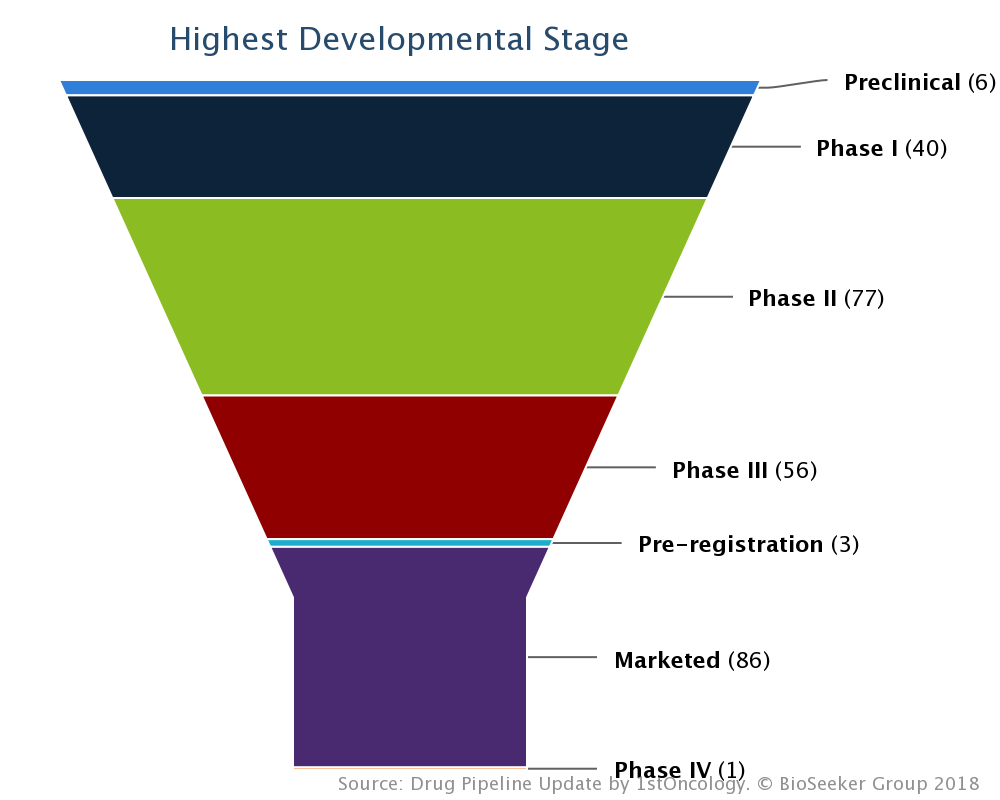
The hotbed of this conference is energized from an underlying cluster of roughly 300 drugs ranging from preclinical to marketed in maturity (see pipeline breakdown by stage above). Two fifths (40%) of these are Immune-Oncology drugs including Immune Checkpoint drugs, Cancer vaccines, Bispecific immunomodulators, CAR/TCR therapies and Oncolytic virotherapies. In the spotlight of this year’s Nobel Prize in Physiology or Medicine E.S.M.O 2018 features nearly 40 different immune checkpoint drugs, by far the most reported on immunotherapy and even more so if we take into account all combination therapy reports with the same. Other hot progress areas in cancer therapeutics include DNA Damage Response (DDR) drugs, epigenetic therapies, protein kinase inhibitors and antibody-drug conjugates (ADCs).

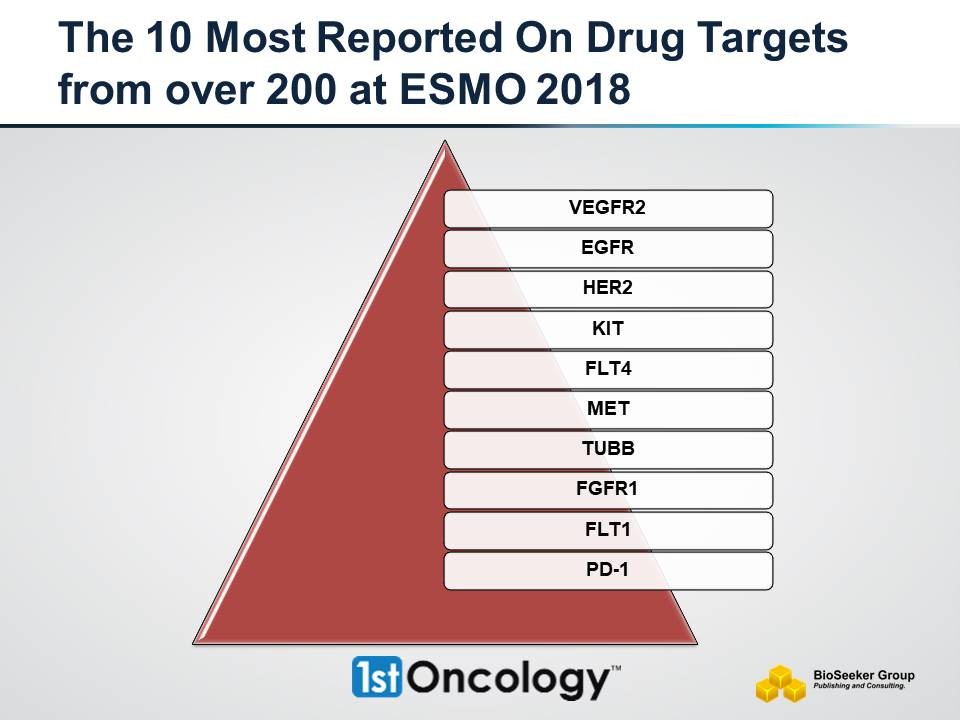
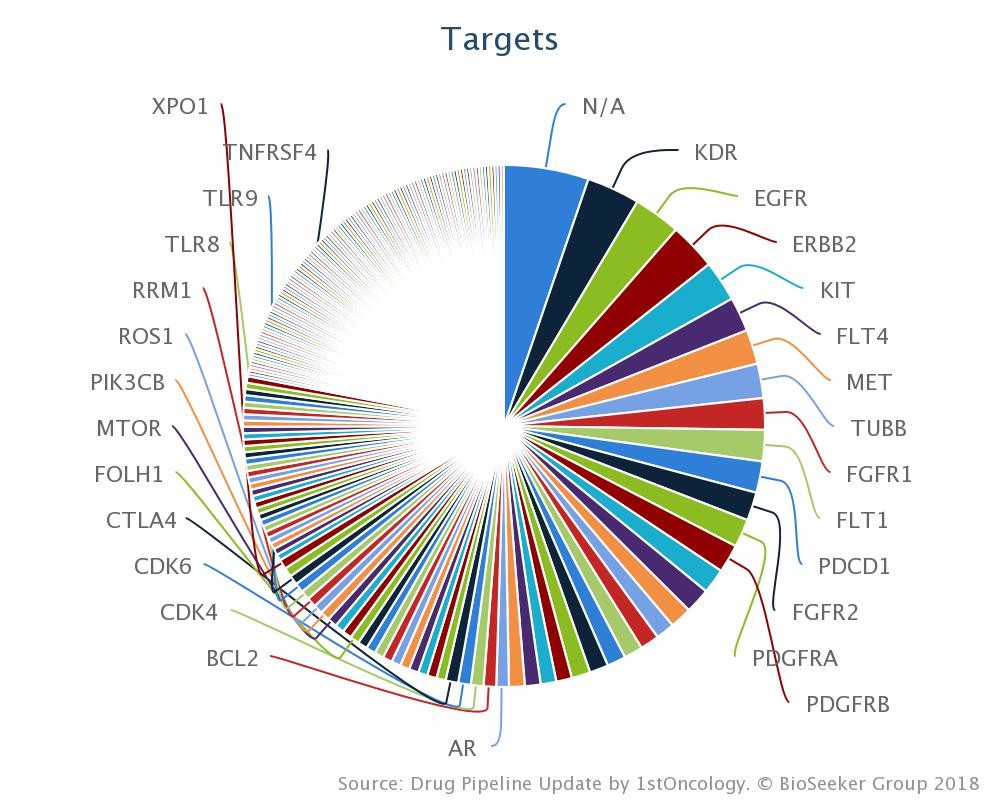
The number of targets related to the aforementioned drugs is close to 200 were the top five drug targets are: KDR/VEGFR2 (17), EGFR (15), HER2 (14), KIT (13) and FLT4 (11) (see target breakdown above).

On the contrasting end of these we find fourteen unique targets belonging to first-in-class drugs like Astellas’ enfortumab vedotin, a fully humanized monoclonal antibody that delivers the microtubule-disrupting agent monomethyl auristatin E to tumors expressing Nectin-4, which is highly expressed in 97% of metastatic urothelial cancer patient samples.

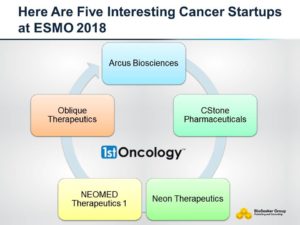
There is a global presence of companies at E.S.M.O 2018 ranging from big pharma to startups like Arcus Biosciences (USA), CStone Pharmaceuticals (China), Neon Therapeutics (USA), NEOMED Therapeutics 1 (Canada) and Oblique Therapeutics (Sweden).

It is noteworthy to mention that both Arcus Biosciences and Neon Therapeutics are 2016 winners of the prestigious Fierce 15 Biotech award (see 2018 cancer winners here). This prestigious award has come to symbolize novelty and being at the forefront of biotechnology development among businesses. The winners of this award are aiming at breakthroughs and big things, not at being ‘me-too’. For an example Arcus Biosciences is reporting stellar safety data from its phase 1 study of AB928, a dual antagonist of the A2aR and A2bR adenosine receptors. This development is of course only the tip of the iceberg of clinical trial reports presented at this year’s conference. In a late breaking abstract (LBA) Friday (October 19) Merrimack Pharmaceuticals will be providing more information to their previous report in June about their failed CARRIE study, evaluating the addition of istiratumab (MM-141) to standard-of-care treatment in patients with previously untreated metastatic pancreatic cancer and high serum levels of free Insulin-like Growth Factor-1 (For more LBAs see Saturday, Sunday and Monday releases). The study did not meet its primary or secondary efficacy endpoints in patients who received istiratumab in combination with nab-paclitaxel and gemcitabine, compared to nab-paclitaxel and gemcitabine alone. These results were consistent in all subgroups analyzed.

In overall the late breaking abstracts presented at ESMO (Free ESMO Whitepaper) 2018 are testament to years of rapid growth of and interest in combination therapy trials and in particular with immune-checkpoint inhibitors. On Saturday (October 20th) Genentech/Hoffman-La Roche got the world’s attention with “game changing” results from their IMpassion130 study, a global, randomised, double-blind, phase 3 study of atezolizumab + nab-paclitaxel versus placebo + nab-paclitaxel in treatment-naive, locally advanced or metastatic triple-negative breast cancer (mTNBC). Among those who received the combination, the median survival was 21.3 months, compared with 17.6 months for those who received chemotherapy alone. The difference was not statistically significant. However, looking only at women with positive PD-L1 expressing tumors the median survival was 25 months in the combination group, versus 15.5 months with just chemotherapy. That finding has however not been analyzed statistically, and the patients are still being followed. These finds were simultaneously published in View Source">The New England Journal of Medicine and presented at ESMO 2018.

In spite of limited representation of a major therapeutic class like CAR/TCR therapies or the latest progress on targeting the CD47-SIRPA axis, all in all the ESMO (Free ESMO Whitepaper) congress is Europe’s largest clinical oncology meeting and a go-to place that acts as a sign-post on the road ahead in cancer drug development.