Bio-Europe is a Who’s Who of Cancer Companies and Technologies

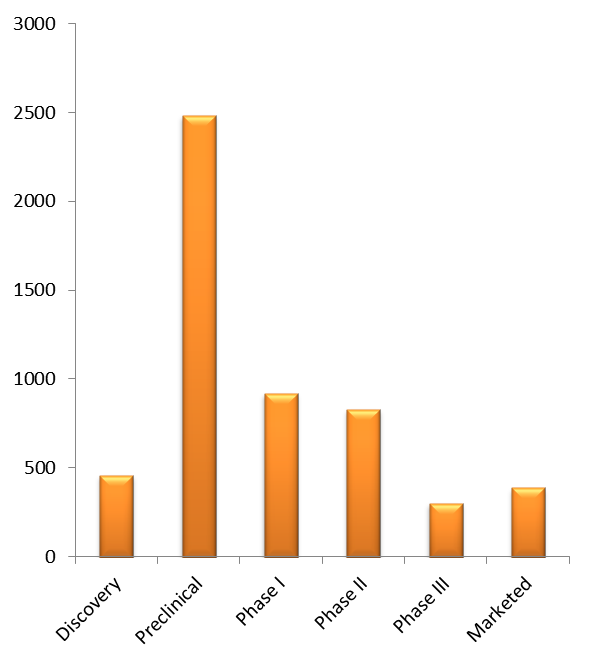
With a pedigree stretching back almost a quarter of a century, BIO-Europe is not only Europe’s largest partnering conference but, according to a recent analysis by 1stOncology™ (also covering BIO International and BIO Asia), it is also one of the world’s richest displays of cancer drug development companies under one roof! With over 600 oncology companies from more than thirty different countries present at BIO-Europe 2018, this is truly a global event. Many of these have also just presented their latest scientific/clinical advancements at the freshly completed European Society of Medical Oncology (ESMO) (Free ESMO Whitepaper) (ESMO 2018) congress. Now coming together at the BIO-Europe 2018 meeting they represent more than 5,500 cancer drugs, from discovery to marketed, and are responsible for more than 40% of the world’s current output in cancer R&D, see pipeline breakdown below.
These new cancer drug technologies are being developed from a wide array of organizations, from centuries old universities such as Jagiellonian University (Poland) founded in 1364, to startup companies like Cedilla Therapeutics (USA) and Epigene Therapeutics (Canada), both founded in 2018. Regardless of age they are all coming together at BIO-Europe 2018 to engage with global life science partners.

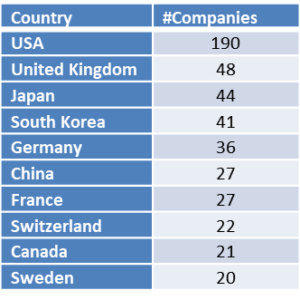
The global nature of this meeting is revealed when looking at the top nations with cancer drug developing companies present at this year BIO-Europe. It is no surprise to see the United States in first place with 190 companies, UK in second with 48 and Japan is in third place with 41 companies. Please see below table for the top ten nations at BIO-Europe 2018.
In today’s fast moving climate where a company can go from an idea to a public company in a blink of an eye, roughly one third of the 600 cancer companies are publicly traded at various stock exchange markets around the world. No less than seven of these have gone through their initial public offering in 2018 alone, namely ARMO BioSciences, ASLAN Pharmaceuticals, Autolus, BeiGene, Forty Seven, MorphoSys and Sutro Biopharma.

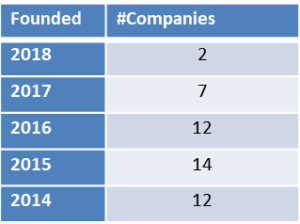
The number of cancer startups, founded in the last five years, present at the BIO-Europe meetings amount to almost fifty, see table below for breakdown per year.
The sizeable cancer pipeline of more than five and a half thousand drugs represented at BIO-Europe is a based on a very diverse selection of technologies and discoveries in cancer biology. Almost one third of these are Immune-Oncology (I-O) drugs including Immune Checkpoint drugs, Cancer vaccines, Bispecific immunomodulators, CAR/TCR therapies and Oncolytic virotherapies, see breakdown by type of I-O drugs below.
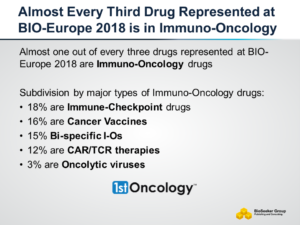
In the spotlight of this year’s Nobel Prize in Physiology or Medicine, companies at BIO-Europe feature nearly 300 different immune checkpoint drugs. Other hot progress areas in cancer therapeutics include DNA Damage Response (DDR) drugs, epigenetic therapies, Protein Kinase Inhibitors (PKIs) and Antibody-Dug Conjugates (ADCs).

Schedule your 30 min Free 1stOncology Demo!
Discover why more than 1,500 members use 1stOncology™ to excel in:

Early/Late Stage Pipeline Development - Target Scouting - Clinical Biomarkers - Indication Selection & Expansion - BD&L Contacts - Conference Reports - Combinatorial Drug Settings - Companion Diagnostics - Drug Repositioning - First-in-class Analysis - Competitive Analysis - Deals & Licensing

                  Schedule Your 30 min Free Demo!

POSEIDA THERAPEUTICS RECEIVES REGENERATIVE MEDICINE ADVANCED THERAPY (RMAT) DESIGNATION FROM FDA FOR P-BCMA-101

On November 5, 2018 Poseida Therapeutics Inc., a clinical-stage biopharmaceutical company focused on leveraging proprietary next-generation, non-viral gene engineering technologies to create life-saving therapeutics, reported the U.S. Food and Drug Administration (FDA) has granted a Regenerative Medicine Advanced Therapy (RMAT) designation to P-BCMA-101, Poseida’s lead CAR-T therapeutic candidate currently in a Phase 1 clinical trial for the treatment of patients with relapsed/refractory multiple myeloma (Press release, Poseida Therapeutics, NOV 5, 2018, View Source [SID1234565400]). RMAT designation includes all of the benefits of the Fast Track and Breakthrough Therapy designation programs, including early interactions with the FDA.

Schedule your 30 min Free 1stOncology Demo!
Discover why more than 1,500 members use 1stOncology™ to excel in:

Early/Late Stage Pipeline Development - Target Scouting - Clinical Biomarkers - Indication Selection & Expansion - BD&L Contacts - Conference Reports - Combinatorial Drug Settings - Companion Diagnostics - Drug Repositioning - First-in-class Analysis - Competitive Analysis - Deals & Licensing

                  Schedule Your 30 min Free Demo!

"P-BCMA-101 is the first anti-BCMA CAR-T therapy to receive RMAT designation from the FDA and underscores the urgent need for new treatment options for multiple myeloma," said Eric Ostertag, M.D., Ph.D., chief executive officer of Poseida Therapeutics. "Initial Phase 1 data presented at the CAR-TCR Summit earlier this year included encouraging response rates and safety data, including meaningful responses in a heavily pretreated population, with some patients reaching VGPR and stringent CR. We expect to have an additional data update by the end of the year and look forward to working closely with the FDA to expedite development of P-BCMA-101."

The RMAT designation is a program under the 21st Century Cures Act that is intended to expedite the development and review of regenerative medicines for the treatment of serious or life-threatening diseases and conditions. A regenerative medicine therapy is eligible for the designation if it is intended to treat, modify, reverse or cure a serious or life-threatening disease or condition, and preliminary clinical evidence indicates that the product has the potential to address unmet medical needs for such a disease or condition.

RMAT designation includes all Breakthrough Therapy designation features, including early interactions to discuss any potential surrogate or intermediate endpoints. RMATs may be eligible for accelerated approval based on previously agreed-upon surrogate or intermediate endpoints that are reasonably likely to predict long-term clinical benefit, or reliance upon data obtained from a meaningful number of sites, including through expansion to additional sites, as appropriate.

About P-BCMA-101
P-BCMA-101 is an autologous CAR-T therapeutic candidate being developed to treat patients with relapsed/refractory multiple myeloma. P-BCMA-101 targets cells that express B cell maturation antigen, or BCMA, which is expressed on essentially all multiple myeloma cells. P-BCMA-101 is engineered with Poseida’s non-viral piggyBac DNA Modification System, resulting in a high percentage of T stem cell memory cells. Preliminary results from the company’s ongoing Phase 1 clinical trial suggest that P-BCMA-101 may have improved response rates with a favorable safety profile compared to published results from clinical trials of other CAR-T therapies at similar doses. Low to no levels of cytokine release syndrome or neurotoxicity have been seen. The Phase 1 study is funded in part by the California Institute for Regenerative Medicine.

SpringWorks Therapeutics Receives FDA Orphan Drug Designation for MEK Inhibitor
(PD-0325901) for the Treatment of Neurofibromatosis Type 1

On November 5, 2018 SpringWorks Therapeutics, a clinical-stage biopharmaceutical company focused on developing life-changing medicines for patients with severe rare diseases and cancer, reported that the U.S. Food and Drug Administration (FDA) has granted Orphan Drug designation for PD-0325901, an investigational, oral, small molecule selective inhibitor of MEK1 and MEK2, for the treatment neurofibromatosis type 1 (Press release, SpringWorks Therapeutics, NOV 5, 2018, View Source [SID1234538852]).

Schedule your 30 min Free 1stOncology Demo!
Discover why more than 1,500 members use 1stOncology™ to excel in:

Early/Late Stage Pipeline Development - Target Scouting - Clinical Biomarkers - Indication Selection & Expansion - BD&L Contacts - Conference Reports - Combinatorial Drug Settings - Companion Diagnostics - Drug Repositioning - First-in-class Analysis - Competitive Analysis - Deals & Licensing

                  Schedule Your 30 min Free Demo!

Neurofibromatosis type 1, or NF1, is a rare genetic disorder that is caused by mutations in the NF1 gene, and that affects both children and adults. NF1 mutations can result in a loss of activity in the protein neurofibromin, which can lead to MAPK pathway overactivation, uncontrolled cellular growth, and tumor formation.1 NF1 is a heterogeneous condition that frequently causes plexiform neurofibromas, which are painful, disfiguring tumors of the peripheral nervous system. It is estimated that there are approximately 100,000 patients in the United States living with NF1. 2

"There is an urgent need for an effective treatment for patients with NF1. We are pleased that the FDA has granted Orphan Drug designation for our MEK inhibitor, recognizing its potential to improve the outlook for patients and families facing NF1," said Saqib Islam, Chief Executive Officer of SpringWorks Therapeutics. "We look forward to working closely with the FDA as we prepare to initiate a Phase 2b study of PD-0325901 in patients with NF1-associated plexiform neurofibromas, a severe form of NF1 that causes tumors to grow on nerves throughout the body, which can cause severe pain, disfigurement, loss of range of motion, and shortened lifespan."

The FDA, through its Office of Orphan Products Development (OOPD), grants orphan drug designation to drugs and biologic products that are intended for treatment of rare diseases or disorders that affect fewer than 200,000 people in the United States. Orphan drug status is intended to facilitate drug development for rare diseases and may provide certain benefits and incentives to drug developers, including seven years of market exclusivity if the drug is approved, FDA assistance in clinical trial design, and tax credits for qualified clinical trial costs. 3

SpringWorks expects to initiate a Phase 2b single-arm, open-label study of PD-0325901 in patients with neurofibromatosis type 1-associated plexiform neurofibromas (NF1-associated PN) in the first half of 2019.

About Neurofibromatosis Type 1
Neurofibromatosis type 1, or NF1, is a rare genetic disorder that is caused by mutations in the NF1 gene, and that affects both children and adults. Throughout their lifetime, about 30 to 50 percent of NF1 patients progress to a more severe form of the disease that results in the development of plexiform neurofibromas (PN), which are progressive peripheral nerve sheath tumors that cause severe pain, morbidity, and can significantly shorten lifespan.4-6 The clinical course of NF1-associated PN is heterogeneous with varying manifestations and severity across patients.

It is estimated that NF1 affects 1 in 3,000 individuals worldwide, and that there are approximately 100,000 patients in the United States living with this disease.2 Most patients with NF1-associated PN are treated with surgical removal of the tumors, sometimes requiring amputation; however, surgery has variable success rates and a high rate of recurrence has been observed because of the aggressive nature of these tumors.7 There are no therapies currently approved for the treatment of NF1-associated PN.

About PD-0325901
PD-0325901 is an investigational, oral, small molecule, selective inhibitor of MEK1 and MEK2, proteins that play key roles in the MAPK pathway. The MAPK pathway is critical for cell survival and proliferation, and overactivation of this pathway has been shown to help enable tumor growth. By blocking activity of the MAPK pathway, PD-0325901 may help arrest uncontrolled cellular growth associated with many types of tumors.

PD-0325901 has been tested in several Phase 1 and Phase 2 clinical trials, and approximately 260 subjects have been exposed to treatment. SpringWorks is evaluating PD-0325901 as a monotherapy for the treatment of patients with neurofibromatosis type 1-associated plexiform neurofibromas (NF1-associated PN). In addition, given the critical role that the MAPK pathway plays in the growth and proliferation of a large number of tumor types, SpringWorks is also pursuing PD-0325901 in combination with other rational anticancer agents across a range of solid tumors.

Cotinga Pharmaceuticals Announces Research Partnership with St. Vincent’s University Hospital to Evaluate COTI-2

On November 5, 2019 Cotinga Pharmaceuticals Inc. (TSX Venture: COT; OTCQB: COTQF) ("Cotinga" or the "Company"), a clinical-stage pharmaceutical company advancing a pipeline of targeted therapies for the treatment of cancer, reported that it has entered into a research collaboration with St. Vincent’s University Hospital in Dublin, Ireland to evaluate COTI-2 in combination with eribulin in patients with triple negative metastatic breast cancer (Press release, Cotinga, NOV 5, 2018, View Source [SID1234533149]).

Schedule your 30 min Free 1stOncology Demo!
Discover why more than 1,500 members use 1stOncology™ to excel in:

Early/Late Stage Pipeline Development - Target Scouting - Clinical Biomarkers - Indication Selection & Expansion - BD&L Contacts - Conference Reports - Combinatorial Drug Settings - Companion Diagnostics - Drug Repositioning - First-in-class Analysis - Competitive Analysis - Deals & Licensing

                  Schedule Your 30 min Free Demo!

"Cotinga is committed to the development of therapies for a wide range of cancers, and our collaboration with St. Vincent’s University Hospital represents an important step towards realizing the full potential of our lead compound, COTI-2," said Dr. Richard Ho, M.D., Ph.D., Chief Scientific Officer. "Throughout this year we presented preclinical and early clinical results that support COTI-2 as a possible combination therapy, and this partnership with St. Vincent’s will allow us to further explore how COTI-2 may work alongside the standard of care in cancers with severe unmet medical need."

The Phase 1 study will aim to evaluate COTI-2 in combination with eribulin in the second or subsequent line therapy of patients with triple negative metastatic breast cancer. The primary objectives of the study will be to determine the optimal tolerated dose of COTI-2 that can be added to standard dose eribulin in the second or subsequent line treatment of metastatic breast cancer, and to assess the safety and tolerability of COTI-2 when administered with eribulin.

"Triple-negative metastatic breast cancer is a serious and difficult-to-treat disease that tends to be more aggressive than other types of breast cancer," said Professor John Crown, M.D., M.B.A., consultant medical oncologist at St. Vincent’s University Hospital. "Our research demonstrates that the p53 gene is mutated in approximately 80% of triple-negative tumors, and suggests that mutant p53 has potential as a therapeutic target. We are encouraged by early data from COTI-2, which targets mutant p53, and having seen synergy in our own preclinical testing of COTI-2 and eribulin, we look forward to evaluating the compound in combination with standard of care for patients with triple negative metastatic breast cancer."

Flex Pharma Reports Third Quarter 2018 Financial Results

On November 5, 2018 Flex Pharma, Inc. (NASDAQ: FLKS), reported its financial results for the three months ended September 30, 2018 (Press release, Flex Pharma, NOV 5, 2018, View Source [SID1234532475]).

Schedule your 30 min Free 1stOncology Demo!
Discover why more than 1,500 members use 1stOncology™ to excel in:

Early/Late Stage Pipeline Development - Target Scouting - Clinical Biomarkers - Indication Selection & Expansion - BD&L Contacts - Conference Reports - Combinatorial Drug Settings - Companion Diagnostics - Drug Repositioning - First-in-class Analysis - Competitive Analysis - Deals & Licensing

                  Schedule Your 30 min Free Demo!

On June 13, 2018, the Company announced that it was ending its ongoing Phase 2 clinical trial investigations of FLX-787 in Motor Neuron Disease (MND), which primarily included patients with amyotrophic lateral sclerosis (ALS), and in Charcot-Marie-Tooth disease (CMT), was reducing its workforce and engaged Wedbush PacGrow to help the Company assess its strategic alternatives.

"During the third quarter, we continued our assessment of strategic alternatives for the Company. While that assessment is underway, we are working diligently to conserve working capital and enhance stockholder value. We plan to announce additional information once our assessment is complete," stated Bill McVicar, Ph.D., President and CEO of Flex Pharma.

Corporate Activities:

The Company has stopped its clinical trials in MND and CMT and the wind-down of the associated activities was completed in the third quarter of 2018.

The reduction in the Company’s workforce announced on June 13, 2018 was completed by September 30, 2018.
Third Quarter 2018 Financial Results

Cash Position: As of September 30, 2018, Flex Pharma had cash and cash equivalents of $13.0 million. The Company held no marketable securities at September 30, 2018. During the three months ended September 30, 2018, cash and cash equivalents decreased by $2.8 million.

Total Revenue: Total HOTSHOT revenue for the three months ended September 30, 2018 was approximately $251,000.

Cost of Product Revenue: Cost of product revenue for the three months ended September 30, 2018 was approximately $92,000. There were no inventory write-offs during the three months ended September 30, 2018.
R&D Expense: Research and development expense for the three months ended September 30, 2018 was $0.9 million. Research and development expense for this period primarily included costs associated with the Company’s clinical operations and wind-down of FLX-787 Phase 2 clinical studies, personnel costs (including salaries, termination-related costs, retention-related costs and stock-based compensation costs) and external consultant costs.
SG&A Expense: Selling, general and administrative expense for the three months ended September 30, 2018 was $2.0 million. Selling, general and administrative expense for this period primarily included personnel costs (including salaries, retention-related costs and stock-based compensation costs), fulfillment costs related to HOTSHOT, legal and professional costs, and external consultant costs.

Net Loss and Cash Flow: Net loss for the three months ended September 30, 2018 was ($2.6) million, or ($0.15) per share and included $0.3 million of stock-based compensation expense. As of September 30, 2018, Flex Pharma had 18,066,767 shares of common stock outstanding. The net loss for the third quarter of 2018 was primarily driven by the Company’s operating expenses related to its research and development efforts, costs associated with HOTSHOT, and general and administrative costs.