Bristol-Myers Squibb Provides Update on the Ongoing Regulatory Review of Opdivo Plus Low-Dose Yervoy in First-Line Lung Cancer Patients with Tumor Mutational Burden ≥10 mut/Mb

On October 19, 2018 Bristol-Myers Squibb Company (NYSE:BMY) reported that updates regarding regulatory actions by health authorities in the United States (U.S.) and European Union (EU) for the ongoing review of its applications for an indication in metastatic first-line non-small cell lung cancer with Opdivo (nivolumab) plus low-dose Yervoy (ipilimumab) in patients with tumor mutational burden (TMB) ≥10 mutations/megabase (mut/Mb) (Press release, Bristol-Myers Squibb, OCT 19, 2018, View Source [SID1234529989]). Both applications are based on data from Part 1 of the ongoing Phase 3 CheckMate -227 trial.

Schedule your 30 min Free 1stOncology Demo!
Discover why more than 1,500 members use 1stOncology™ to excel in:

Early/Late Stage Pipeline Development - Target Scouting - Clinical Biomarkers - Indication Selection & Expansion - BD&L Contacts - Conference Reports - Combinatorial Drug Settings - Companion Diagnostics - Drug Repositioning - First-in-class Analysis - Competitive Analysis - Deals & Licensing

                  Schedule Your 30 min Free Demo!

As part of the ongoing EU review process, the Committee for Medicinal Products for Human Use (CHMP) requested additional information from CheckMate -227, including an overall survival (OS) analysis of Opdivo plus Yervoy in patients who have TMB <10 mut/Mb. Bristol-Myers Squibb obtained agreement from the CHMP for an extension of the clock-stop for its type II variation application to address this first request for supplementary information. The Company previously announced the validation of the application in May 2018.

The Company submitted the OS analysis for the TMB <10 mut/Mb subgroup to the FDA. The FDA determined that the submission of this new information constituted a major amendment to the sBLA and notified the Company today that the review period was extended by three months with a new Prescription Drug User Fee Act goal date of May 20, 2019. The Company previously announced the application was accepted for review in June 2018.

Additional Information

In April 2018, the Company presented data at the American Association for Cancer Research (AACR) (Free AACR Whitepaper) Annual Meeting for the co-primary endpoint of progression-free survival from Part 1 of CheckMate -227. These data demonstrated a statistically significant hazard ratio (HR) of 0.58 (97.5% CI: 0.41 to 0.81; p=0.0002) for Opdivo plus low-dose Yervoy versus chemotherapy in patients with TMB ≥10 mut/Mb. The Company also presented a descriptive analysis showing a positive trend for OS with this combination versus chemotherapy in patients with TMB ≥10 mut/Mb (secondary endpoint).
An updated descriptive analysis showed that the HR for OS with Opdivo plus low-dose Yervoy versus chemotherapy in patients with TMB ≥10 mut/Mb was 0.77 (95% CI: 0.56 to 1.06).
New exploratory analysis in patients with TMB <10 mut/Mb showed that the HR for OS with Opdivo plus low-dose Yervoy versus chemotherapy was 0.78 (95% CI: 0.61 to 1.00), comparable to that observed in patients with TMB ≥10 mut/Mb.
The median OS in patients with TMB ≥10 mut/Mb was 23.03 months on the Opdivo plus low-dose Yervoy arm and was 16.72 months on the chemotherapy arm. In patients with TMB <10 mut/Mb the median OS was 16.20 months and was 12.42 months on the combination and chemotherapy arms, respectively.
About CheckMate -227

CheckMate -227 is a multi-part open-label Phase 3 trial evaluating Opdivo-based regimens versus platinum-doublet chemotherapy in patients with first-line advanced non-small cell lung cancer across non-squamous and squamous tumor histologies.

Part 1a: Opdivo plus low-dose Yervoy or Opdivo monotherapy versus chemotherapy in patients whose tumors express PD-L1
Part 1b: Opdivo plus low-dose Yervoy or Opdivo plus chemotherapy versus chemotherapy in patients whose tumors do not express PD-L1
Part 2: Opdivo plus chemotherapy versus chemotherapy, regardless of PD-L1 or tumor mutational burden status (TMB)
There are two co-primary endpoints in Part 1 for Opdivo plus Yervoy (versus chemotherapy): overall survival (OS) in patients whose tumors express PD-L1 (assessed in patients enrolled in Part 1a) and progression-free survival (PFS) in patients with TMB ≥10 mut/Mb across the PD-L1 spectrum (assessed in patients enrolled across Parts 1a and 1b). The primary endpoint in Part 2 is OS. Parts 1a and Part 2 of the study are ongoing. Opdivo and Yervoy are dosed as follows in this study: Opdivo 3 mg/kg every two weeks with low-dose Yervoy (1 mg/kg) every six weeks.

Bristol-Myers Squibb & Immuno-Oncology: Advancing Oncology Research

At Bristol-Myers Squibb, patients are at the center of everything we do. Our vision for the future of cancer care is focused on researching and developing transformational medicines, including Immuno-Oncology (I-O) therapeutic approaches, for hard-to-treat cancers that could potentially improve outcomes for these patients.

We are leading the integrated scientific understanding of both tumor cell and immune system pathways, through our extensive portfolio of investigational compounds and approved agents. Our differentiated clinical development program is studying broad patient populations across more than 50 types of cancers with 24 clinical-stage molecules designed to target different immune system pathways. Our deep expertise and innovative clinical trial designs position us to advance the I-O/I-O, I-O/chemotherapy, I-O/targeted therapies and I-O radiation therapies across multiple tumors and potentially deliver the next wave of therapies with a sense of urgency. We also continue to pioneer research that will help facilitate a deeper understanding of the role of immune biomarkers and how a patient’s tumor biology can be used as a guide for treatment decisions throughout their journey.

We understand making the promise of transformational medicines like I-O therapies a reality for the many patients who may benefit from these therapies requires not only innovation on our part but also close collaboration with leading experts in the field. Our partnerships with academia, government, advocacy and biotech companies support our collective goal of providing new treatment options to advance the standards of clinical practice.

About Opdivo

Opdivo is a programmed death-1 (PD-1) immune checkpoint inhibitor that is designed to uniquely harness the body’s own immune system to help restore anti-tumor immune response. By harnessing the body’s own immune system to fight cancer, Opdivo has become an important treatment option across multiple cancers.

Opdivo’s leading global development program is based on Bristol-Myers Squibb’s scientific expertise in the field of Immuno-Oncology, and includes a broad range of clinical trials across all phases, including Phase 3, in a variety of tumor types. To date, the Opdivo clinical development program has enrolled more than 25,000 patients. The Opdivo trials have contributed to gaining a deeper understanding of the potential role of biomarkers in patient care, particularly regarding how patients may benefit from Opdivo across the continuum of PD-L1 expression.

In July 2014, Opdivo was the first PD-1 immune checkpoint inhibitor to receive regulatory approval anywhere in the world. Opdivo is currently approved in more than 65 countries, including the United States, the European Union, Japan and China. In October 2015, the Company’s Opdivo and Yervoy combination regimen was the first Immuno-Oncology combination to receive regulatory approval for the treatment of metastatic melanoma and is currently approved in more than 50 countries, including the United States and the European Union.

U.S. FDA-APPROVED INDICATIONS FOR OPDIVO

OPDIVO (nivolumab) as a single agent is indicated for the treatment of patients with BRAF V600 mutation-positive unresectable or metastatic melanoma. This indication is approved under accelerated approval based on progression-free survival. Continued approval for this indication may be contingent upon verification and description of clinical benefit in the confirmatory trials.

OPDIVO (nivolumab) as a single agent is indicated for the treatment of patients with BRAF V600 wild-type unresectable or metastatic melanoma.

OPDIVO (nivolumab), in combination with YERVOY (ipilimumab), is indicated for the treatment of patients with unresectable or metastatic melanoma. This indication is approved under accelerated approval based on progression-free survival. Continued approval for this indication may be contingent upon verification and description of clinical benefit in the confirmatory trials.

OPDIVO (nivolumab) is indicated for the treatment of patients with metastatic non-small cell lung cancer (NSCLC) with progression on or after platinum-based chemotherapy. Patients with EGFR or ALK genomic tumor aberrations should have disease progression on FDA-approved therapy for these aberrations prior to receiving OPDIVO.

OPDIVO (nivolumab) is indicated for the treatment of patients with metastatic small cell lung cancer (SCLC) with progression after platinum-based chemotherapy and at least one other line of therapy. This indication is approved under accelerated approval based on overall response rate and duration of response. Continued approval for this indication may be contingent upon verification and description of clinical benefit in confirmatory trials.

OPDIVO (nivolumab) is indicated for the treatment of patients with advanced renal cell carcinoma (RCC) who have received prior anti-angiogenic therapy.

OPDIVO (nivolumab), in combination with YERVOY (ipilimumab), is indicated for the treatment of patients with intermediate or poor risk, previously untreated advanced renal cell carcinoma (RCC).

OPDIVO (nivolumab) is indicated for the treatment of adult patients with classical Hodgkin lymphoma (cHL) that has relapsed or progressed after autologous hematopoietic stem cell transplantation (HSCT) and brentuximab vedotin or after 3 or more lines of systemic therapy that includes autologous HSCT. This indication is approved under accelerated approval based on overall response rate. Continued approval for this indication may be contingent upon verification and description of clinical benefit in confirmatory trials.

OPDIVO (nivolumab) is indicated for the treatment of patients with recurrent or metastatic squamous cell carcinoma of the head and neck (SCCHN) with disease progression on or after platinum-based therapy.

OPDIVO (nivolumab) is indicated for the treatment of patients with locally advanced or metastatic urothelial carcinoma who have disease progression during or following platinum-containing chemotherapy or have disease progression within 12 months of neoadjuvant or adjuvant treatment with platinum-containing chemotherapy. This indication is approved under accelerated approval based on tumor response rate and duration of response. Continued approval for this indication may be contingent upon verification and description of clinical benefit in confirmatory trials.

OPDIVO (nivolumab), as a single agent, is indicated for the treatment of adult and pediatric (12 years and older) patients with microsatellite instability-high (MSI-H) or mismatch repair deficient (dMMR) metastatic colorectal cancer (CRC) that has progressed following treatment with a fluoropyrimidine, oxaliplatin, and irinotecan. This indication is approved under accelerated approval based on overall response rate and duration of response. Continued approval for this indication may be contingent upon verification and description of clinical benefit in confirmatory trials.

OPDIVO (nivolumab), in combination with YERVOY (ipilimumab), is indicated for the treatment of adults and pediatric patients 12 years and older with microsatellite instability-high (MSI-H) or mismatch repair deficient (dMMR) metastatic colorectal cancer (CRC) that has progressed following treatment with a fluoropyrimidine, oxaliplatin, and irinotecan. This indication is approved under accelerated approval based on overall response rate and duration of response. Continued approval for this indication may be contingent upon verification and description of clinical benefit in confirmatory trials.

OPDIVO (nivolumab) is indicated for the treatment of patients with hepatocellular carcinoma (HCC) who have been previously treated with sorafenib. This indication is approved under accelerated approval based on tumor response rate and durability of response. Continued approval for this indication may be contingent upon verification and description of clinical benefit in the confirmatory trials.

OPDIVO (nivolumab) is indicated for the adjuvant treatment of patients with melanoma with involvement of lymph nodes or metastatic disease who have undergone complete resection.

IMPORTANT SAFETY INFORMATION

WARNING: IMMUNE-MEDIATED ADVERSE REACTIONS

YERVOY can result in severe and fatal immune-mediated adverse reactions. These immune-mediated reactions may involve any organ system; however, the most common severe immune-mediated adverse reactions are enterocolitis, hepatitis, dermatitis (including toxic epidermal necrolysis), neuropathy, and endocrinopathy. The majority of these immune-mediated reactions initially manifested during treatment; however, a minority occurred weeks to months after discontinuation of YERVOY.

Assess patients for signs and symptoms of enterocolitis, dermatitis, neuropathy, and endocrinopathy, and evaluate clinical chemistries including liver function tests (LFTs), adrenocorticotropic hormone (ACTH) level, and thyroid function tests, at baseline and before each dose.

Permanently discontinue YERVOY and initiate systemic high-dose corticosteroid therapy for severe immune-mediated reactions.

Immune-Mediated Pneumonitis

OPDIVO can cause immune-mediated pneumonitis. Fatal cases have been reported. Monitor patients for signs with radiographic imaging and for symptoms of pneumonitis. Administer corticosteroids for Grade 2 or more severe pneumonitis. Permanently discontinue for Grade 3 or 4 and withhold until resolution for Grade 2. In patients receiving OPDIVO monotherapy, fatal cases of immune-mediated pneumonitis have occurred. Immune-mediated pneumonitis occurred in 3.1% (61/1994) of patients. In patients receiving OPDIVO 1 mg/kg with YERVOY 3 mg/kg, immune-mediated pneumonitis occurred in 6% (25/407) of patients. In RCC patients receiving OPDIVO 3 mg/kg with YERVOY 1 mg/kg, immune-mediated pneumonitis occurred in 4.4% (24/547) of patients. In MSI-H/dMMR mCRC patients receiving OPDIVO 3 mg/kg with YERVOY 1 mg/kg, immune-mediated pneumonitis occurred in 1.7% (2/119) of patients.

In Checkmate 205 and 039, pneumonitis, including interstitial lung disease, occurred in 6.0% (16/266) of patients receiving OPDIVO. Immune-mediated pneumonitis occurred in 4.9% (13/266) of patients receiving OPDIVO: Grade 3 (n=1) and Grade 2 (n=12).

Immune-Mediated Colitis

OPDIVO can cause immune-mediated colitis. Monitor patients for signs and symptoms of colitis. Administer corticosteroids for Grade 2 (of more than 5 days duration), 3, or 4 colitis. Withhold OPDIVO monotherapy for Grade 2 or 3 and permanently discontinue for Grade 4 or recurrent colitis upon re-initiation of OPDIVO. When administered with YERVOY, withhold OPDIVO and YERVOY for Grade 2 and permanently discontinue for Grade 3 or 4 or recurrent colitis. In patients receiving OPDIVO monotherapy, immune-mediated colitis occurred in 2.9% (58/1994) of patients. In patients receiving OPDIVO 1 mg/kg with YERVOY 3 mg/kg, immune-mediated colitis occurred in 26% (107/407) of patients including three fatal cases. In RCC patients receiving OPDIVO 3 mg/kg with YERVOY 1 mg/kg, immune-mediated colitis occurred in 10% (52/547) of patients. In MSI-H/dMMR mCRC patients receiving OPDIVO 3 mg/kg with YERVOY 1 mg/kg, immune-mediated colitis occurred in 7% (8/119) of patients.

In a separate Phase 3 study of YERVOY 3 mg/kg, severe, life-threatening, or fatal (diarrhea of ≥7 stools above baseline, fever, ileus, peritoneal signs; Grade 3-5) immune-mediated enterocolitis occurred in 34 (7%) patients. Across all YERVOY-treated patients in that study (n=511), 5 (1%) developed intestinal perforation, 4 (0.8%) died as a result of complications, and 26 (5%) were hospitalized for severe enterocolitis.

Immune-Mediated Hepatitis

OPDIVO can cause immune-mediated hepatitis. Monitor patients for abnormal liver tests prior to and periodically during treatment. Administer corticosteroids for Grade 2 or greater transaminase elevations. For patients without HCC, withhold OPDIVO for Grade 2 and permanently discontinue OPDIVO for Grade 3 or 4. For patients with HCC, withhold OPDIVO and administer corticosteroids if AST/ALT is within normal limits at baseline and increases to >3 and up to 5 times the upper limit of normal (ULN), if AST/ALT is >1 and up to 3 times ULN at baseline and increases to >5 and up to 10 times the ULN, and if AST/ALT is >3 and up to 5 times ULN at baseline and increases to >8 and up to 10 times the ULN. Permanently discontinue OPDIVO and administer corticosteroids if AST or ALT increases to >10 times the ULN or total bilirubin increases >3 times the ULN. In patients receiving OPDIVO monotherapy, immune-mediated hepatitis occurred in 1.8% (35/1994) of patients. In patients receiving OPDIVO 1 mg/kg with YERVOY 3 mg/kg, immune-mediated hepatitis occurred in 13% (51/407) of patients. In RCC patients receiving OPDIVO 3 mg/kg with YERVOY 1 mg/kg, immune-mediated hepatitis occurred in 7% (38/547) of patients. In MSI-H/dMMR mCRC patients receiving OPDIVO 3 mg/kg with YERVOY 1 mg/kg, immune-mediated hepatitis occurred in 8% (10/119) of patients.

In Checkmate 040, immune-mediated hepatitis requiring systemic corticosteroids occurred in 5% (8/154) of patients receiving OPDIVO.

In a separate Phase 3 study of YERVOY 3 mg/kg, severe, life-threatening, or fatal hepatotoxicity (AST or ALT elevations >5x the ULN or total bilirubin elevations >3x the ULN; Grade 3-5) occurred in 8 (2%) patients, with fatal hepatic failure in 0.2% and hospitalization in 0.4%.

Immune-Mediated Neuropathies

In a separate Phase 3 study of YERVOY 3 mg/kg, 1 case of fatal Guillain-Barré syndrome and 1 case of severe (Grade 3) peripheral motor neuropathy were reported.

Immune-Mediated Endocrinopathies

OPDIVO can cause immune-mediated hypophysitis, immune-mediated adrenal insufficiency, autoimmune thyroid disorders, and Type 1 diabetes mellitus. Monitor patients for signs and symptoms of hypophysitis, signs and symptoms of adrenal insufficiency, thyroid function prior to and periodically during treatment, and hyperglycemia. Administer hormone replacement as clinically indicated and corticosteroids for Grade 2 or greater hypophysitis. Withhold for Grade 2 or 3 and permanently discontinue for Grade 4 hypophysitis. Administer corticosteroids for Grade 3 or 4 adrenal insufficiency. Withhold for Grade 2 and permanently discontinue for Grade 3 or 4 adrenal insufficiency. Administer hormone-replacement therapy for hypothyroidism. Initiate medical management for control of hyperthyroidism. Withhold OPDIVO for Grade 3 and permanently discontinue for Grade 4 hyperglycemia.

In patients receiving OPDIVO monotherapy, hypophysitis occurred in 0.6% (12/1994) of patients. In patients receiving OPDIVO 1 mg/kg with YERVOY 3 mg/kg, hypophysitis occurred in 9% (36/407) of patients. In RCC patients receiving OPDIVO 3 mg/kg with YERVOY 1 mg/kg, hypophysitis occurred in 4.6% (25/547) of patients. In MSI-H/dMMR mCRC patients receiving OPDIVO 3 mg/kg with YERVOY 1 mg/kg, immune-mediated hypophysitis occurred in 3.4% (4/119) of patients. In patients receiving OPDIVO monotherapy, adrenal insufficiency occurred in 1% (20/1994) of patients. In patients receiving OPDIVO 1 mg/kg with YERVOY 3 mg/kg, adrenal insufficiency occurred in 5% (21/407) of patients. In RCC patients receiving OPDIVO 3 mg/kg with YERVOY 1 mg/kg, adrenal insufficiency occurred in 7% (41/547) of patients. In MSI-H/dMMR mCRC patients receiving OPDIVO 3 mg/kg with YERVOY 1 mg/kg, adrenal insufficiency occurred in 5.9% (7/119) of patients. In patients receiving OPDIVO monotherapy, hypothyroidism or thyroiditis resulting in hypothyroidism occurred in 9% (171/1994) of patients. Hyperthyroidism occurred in 2.7% (54/1994) of patients receiving OPDIVO monotherapy. In patients receiving OPDIVO 1 mg/kg with YERVOY 3 mg/kg, hypothyroidism or thyroiditis resulting in hypothyroidism occurred in 22% (89/407) of patients. Hyperthyroidism occurred in 8% (34/407) of patients receiving this dose of OPDIVO with YERVOY. In RCC patients receiving OPDIVO 3 mg/kg with YERVOY 1 mg/kg, hypothyroidism or thyroiditis resulting in hypothyroidism occurred in 22% (119/547) of patients. Hyperthyroidism occurred in 12% (66/547) of patients receiving this dose of OPDIVO with YERVOY. In MSI-H/dMMR mCRC patients receiving OPDIVO 3 mg/kg with YERVOY 1 mg/kg, hypothyroidism or thyroiditis resulting in hypothyroidism occurred in 15% (18/119) of patients. Hyperthyroidism occurred in 12% (14/119) of patients. In patients receiving OPDIVO monotherapy, diabetes occurred in 0.9% (17/1994) of patients. In patients receiving OPDIVO 1 mg/kg with YERVOY 3 mg/kg, diabetes occurred in 1.5% (6/407) of patients. In RCC patients receiving OPDIVO 3 mg/kg with YERVOY 1 mg/kg, diabetes occurred in 2.7% (15/547) of patients.

In a separate Phase 3 study of YERVOY 3 mg/kg, severe to life-threatening immune-mediated endocrinopathies (requiring hospitalization, urgent medical intervention, or interfering with activities of daily living; Grade 3-4) occurred in 9 (1.8%) patients. All 9 patients had hypopituitarism, and some had additional concomitant endocrinopathies such as adrenal insufficiency, hypogonadism, and hypothyroidism. Six of the 9 patients were hospitalized for severe endocrinopathies.

Immune-Mediated Nephritis and Renal Dysfunction

OPDIVO can cause immune-mediated nephritis. Monitor patients for elevated serum creatinine prior to and periodically during treatment. Administer corticosteroids for Grades 2-4 increased serum creatinine. Withhold OPDIVO for Grade 2 or 3 and permanently discontinue for Grade 4 increased serum creatinine. In patients receiving OPDIVO monotherapy, immune-mediated nephritis and renal dysfunction occurred in 1.2% (23/1994) of patients. In patients receiving OPDIVO 1 mg/kg with YERVOY 3 mg/kg, immune-mediated nephritis and renal dysfunction occurred in 2.2% (9/407) of patients. In RCC patients receiving OPDIVO 3 mg/kg with YERVOY 1 mg/kg, immune-mediated nephritis and renal dysfunction occurred in 4.6% (25/547) of patients. In MSI-H/dMMR mCRC patients receiving OPDIVO 3 mg/kg with YERVOY 1 mg/kg, immune-mediated nephritis and renal dysfunction occurred in 1.7% (2/119) of patients.

Immune-Mediated Skin Adverse Reactions and Dermatitis

OPDIVO can cause immune-mediated rash, including Stevens-Johnson syndrome (SJS) and toxic epidermal necrolysis (TEN), some cases with fatal outcome. Administer corticosteroids for Grade 3 or 4 rash. Withhold for Grade 3 and permanently discontinue for Grade 4 rash. For symptoms or signs of SJS or TEN, withhold OPDIVO and refer the patient for specialized care for assessment and treatment; if confirmed, permanently discontinue. In patients receiving OPDIVO monotherapy, immune-mediated rash occurred in 9% (171/1994) of patients. In patients receiving OPDIVO 1 mg/kg with YERVOY 3 mg/kg, immune-mediated rash occurred in 22.6% (92/407) of patients. In RCC patients receiving OPDIVO 3 mg/kg with YERVOY 1 mg/kg, immune-mediated rash occurred in 16.6% (91/547) of patients. In MSI-H/dMMR mCRC patients receiving OPDIVO 3 mg/kg with YERVOY 1 mg/kg, immune-mediated rash occurred in 14% (17/119) of patients.

In a separate Phase 3 study of YERVOY 3 mg/kg, severe, life-threatening, or fatal immune-mediated dermatitis (eg, Stevens-Johnson syndrome, toxic epidermal necrolysis, or rash complicated by full thickness dermal ulceration, or necrotic, bullous, or hemorrhagic manifestations; Grade 3-5) occurred in 13 (2.5%) patients. 1 (0.2%) patient died as a result of toxic epidermal necrolysis. 1 additional patient required hospitalization for severe dermatitis.

Immune-Mediated Encephalitis

OPDIVO can cause immune-mediated encephalitis. Evaluation of patients with neurologic symptoms may include, but not be limited to, consultation with a neurologist, brain MRI, and lumbar puncture. Withhold OPDIVO in patients with new-onset moderate to severe neurologic signs or symptoms and evaluate to rule out other causes. If other etiologies are ruled out, administer corticosteroids and permanently discontinue OPDIVO for immune-mediated encephalitis. In patients receiving OPDIVO monotherapy, encephalitis occurred in 0.2% (3/1994) of patients. Fatal limbic encephalitis occurred in one patient after 7.2 months of exposure despite discontinuation of OPDIVO and administration of corticosteroids. Encephalitis occurred in one patient receiving OPDIVO 1 mg/kg with YERVOY 3 mg/kg (0.2%) after 1.7 months of exposure. Encephalitis occurred in one RCC patient receiving OPDIVO 3 mg/kg with YERVOY 1 mg/kg (0.2%) after approximately 4 months of exposure. Encephalitis occurred in one MSI-H/dMMR mCRC patient (0.8%) receiving OPDIVO 3 mg/kg with YERVOY 1 mg/kg after 15 days of exposure.

Other Immune-Mediated Adverse Reactions

Based on the severity of the adverse reaction, permanently discontinue or withhold OPDIVO, administer high-dose corticosteroids, and, if appropriate, initiate hormone-replacement therapy. Across clinical trials of OPDIVO monotherapy or in combination with YERVOY, the following clinically significant immune-mediated adverse reactions, some with fatal outcome, occurred in <1.0% of patients receiving OPDIVO: myocarditis, rhabdomyolysis, myositis, uveitis, iritis, pancreatitis, facial and abducens nerve paresis, demyelination, polymyalgia rheumatica, autoimmune neuropathy, Guillain-Barré syndrome, hypopituitarism, systemic inflammatory response syndrome, gastritis, duodenitis, sarcoidosis, histiocytic necrotizing lymphadenitis (Kikuchi lymphadenitis), motor dysfunction, vasculitis, aplastic anemia, pericarditis, and myasthenic syndrome.

If uveitis occurs in combination with other immune-mediated adverse reactions, consider a Vogt-Koyanagi-Harada-like syndrome, which has been observed in patients receiving OPDIVO and may require treatment with systemic steroids to reduce the risk of permanent vision loss.

Infusion Reactions

OPDIVO can cause severe infusion reactions, which have been reported in <1.0% of patients in clinical trials. Discontinue OPDIVO in patients with Grade 3 or 4 infusion reactions. Interrupt or slow the rate of infusion in patients with Grade 1 or 2. In patients receiving OPDIVO monotherapy as a 60-minute infusion, infusion-related reactions occurred in 6.4% (127/1994) of patients. In a separate study in which patients received OPDIVO monotherapy as a 60-minute infusion or a 30-minute infusion, infusion-related reactions occurred in 2.2% (8/368) and 2.7% (10/369) of patients, respectively. Additionally, 0.5% (2/368) and 1.4% (5/369) of patients, respectively, experienced adverse reactions within 48 hours of infusion that led to dose delay, permanent discontinuation or withholding of OPDIVO. In patients receiving OPDIVO 1 mg/kg with YERVOY 3 mg/kg every 3 weeks, infusion-related reactions occurred in 2.5% (10/407) of patients. In RCC patients receiving OPDIVO 3 mg/kg with YERVOY 1 mg/kg, infusion-related reactions occurred in 5.1% (28/547) of patients. In MSI-H/dMMR mCRC patients receiving OPDIVO 3 mg/kg with YERVOY 1 mg/kg, infusion-related reactions occurred in 4.2% (5/119) of patients.

Complications of Allogeneic HSCT after OPDIVO

Complications, including fatal events, occurred in patients who received allogeneic HSCT after OPDIVO. Outcomes were evaluated in 17 patients from Checkmate 205 and 039, who underwent allogeneic HSCT after discontinuing OPDIVO (15 with reduced-intensity conditioning, 2 with myeloablative conditioning). Thirty-five percent (6/17) of patients died from complications of allogeneic HSCT after OPDIVO. Five deaths occurred in the setting of severe or refractory GVHD. Grade 3 or higher acute GVHD was reported in 29% (5/17) of patients. Hyperacute GVHD was reported in 20% (n=2) of patients. A steroid-requiring febrile syndrome, without an identified infectious cause, was reported in 35% (n=6) of patients. Two cases of encephalitis were reported: Grade 3 (n=1) lymphocytic encephalitis without an identified infectious cause, and Grade 3 (n=1) suspected viral encephalitis. Hepatic veno-occlusive disease (VOD) occurred in one patient, who received reduced-intensity conditioned allogeneic HSCT and died of GVHD and multi-organ failure. Other cases of hepatic VOD after reduced-intensity conditioned allogeneic HSCT have also been reported in patients with lymphoma who received a PD-1 receptor blocking antibody before transplantation. Cases of fatal hyperacute GVHD have also been reported. These complications may occur despite intervening therapy between PD-1 blockade and allogeneic HSCT.

Follow patients closely for early evidence of transplant-related complications such as hyperacute GVHD, severe (Grade 3 to 4) acute GVHD, steroid-requiring febrile syndrome, hepatic VOD, and other immune-mediated adverse reactions, and intervene promptly.

Embryo-Fetal Toxicity

Based on their mechanisms of action, OPDIVO and YERVOY can cause fetal harm when administered to a pregnant woman. Advise pregnant women of the potential risk to a fetus. Advise females of reproductive potential to use effective contraception during treatment with an OPDIVO- or YERVOY- containing regimen and for at least 5 months after the last dose of OPDIVO.

Lactation

It is not known whether OPDIVO or YERVOY is present in human milk. Because many drugs, including antibodies, are excreted in human milk and because of the potential for serious adverse reactions in nursing infants from an OPDIVO-containing regimen, advise women to discontinue breastfeeding during treatment. Advise women to discontinue breastfeeding during treatment with YERVOY and for 3 months following the final dose.

Serious Adverse Reactions

In Checkmate 037, serious adverse reactions occurred in 41% of patients receiving OPDIVO (n=268). Grade 3 and 4 adverse reactions occurred in 42% of patients receiving OPDIVO. The most frequent Grade 3 and 4 adverse drug reactions reported in 2% to <5% of patients receiving OPDIVO were abdominal pain, hyponatremia, increased aspartate aminotransferase, and increased lipase. In Checkmate 066, serious adverse reactions occurred in 36% of patients receiving OPDIVO (n=206). Grade 3 and 4 adverse reactions occurred in 41% of patients receiving OPDIVO. The most frequent Grade 3 and 4 adverse reactions reported in ≥2% of patients receiving OPDIVO were gamma-glutamyltransferase increase (3.9%) and diarrhea (3.4%). In Checkmate 067, serious adverse reactions (73% and 37%), adverse reactions leading to permanent discontinuation (43% and 14%) or to dosing delays (55% and 28%), and Grade 3 or 4 adverse reactions (72% and 44%) all occurred more frequently in the OPDIVO plus YERVOY arm (n=313) relative to the OPDIVO arm (n=313). The most frequent (≥10%) serious adverse reactions in the OPDIVO plus YERVOY arm and the OPDIVO arm, respectively, were diarrhea (13% and 2.6%), colitis (10% and 1.6%), and pyrexia (10% and 0.6%). In Checkmate 017 and 057, serious adverse reactions occurred in 46% of patients receiving OPDIVO (n=418). The most frequent serious adverse reactions reported in ≥2% of patients receiving OPDIVO were pneumonia, pulmonary embolism, dyspnea, pyrexia, pleural effusion, pneumonitis, and respiratory failure. In Checkmate 032, serious adverse reactions occurred in 45% of patients receiving OPDIVO (n=245). The most frequent serious adverse reactions reported in at least 2% of patients receiving OPDIVO were pneumonia, dyspnea, pneumonitis, pleural effusion, and dehydration. In Checkmate 025, serious adverse reactions occurred in 47% of patients receiving OPDIVO (n=406). The most frequent serious adverse reactions reported in ≥2% of patients were acute kidney injury, pleural effusion, pneumonia, diarrhea, and hypercalcemia. In Checkmate 214, serious adverse reactions occurred in 59% of patients receiving OPDIVO plus YERVOY and in 43% of patients receiving sunitinib. The most frequent serious adverse reactions reported in ≥2% of patients were diarrhea, pyrexia, pneumonia, pneumonitis, hypophysitis, acute kidney injury, dyspnea, adrenal insufficiency, and colitis; in patients treated with sunitinib, they were pneumonia, pleural effusion, and dyspnea. In Checkmate 205 and 039, adverse reactions leading to discontinuation occurred in 7% and dose delays due to adverse reactions occurred in 34% of patients (n=266). Serious adverse reactions occurred in 26% of patients. The most frequent serious adverse reactions reported in ≥1% of patients were pneumonia, infusion-related reaction, pyrexia, colitis or diarrhea, pleural effusion, pneumonitis, and rash. Eleven patients died from causes other than disease progression: 3 from adverse reactions within 30 days of the last OPDIVO dose, 2 from infection 8 to 9 months after completing OPDIVO, and 6 from complications of allogeneic HSCT. In Checkmate 141, serious adverse reactions occurred in 49% of patients receiving OPDIVO (n=236). The most frequent serious adverse reactions reported in ≥2% of patients receiving OPDIVO were pneumonia, dyspnea, respiratory failure, respiratory tract infection, and sepsis. In Checkmate 275, serious adverse reactions occurred in 54% of patients receiving OPDIVO (n=270). The most frequent serious adverse reactions reported in ≥2% of patients receiving OPDIVO were urinary tract infection, sepsis, diarrhea, small intestine obstruction, and general physical health deterioration. In Checkmate 142 in MSI-H/dMMR mCRC patients receiving OPDIVO with YERVOY, serious adverse reactions occurred in 47% of patients. The most frequent serious adverse reactions reported in ≥2% of patients were colitis/diarrhea, hepatic events, abdominal pain, acute kidney injury, pyrexia, and dehydration. In Checkmate 040, serious adverse reactions occurred in 49% of patients (n=154). The most frequent serious adverse reactions reported in ≥2% of patients were pyrexia, ascites, back pain, general physical health deterioration, abdominal pain, and pneumonia. In Checkmate 238, Grade 3 or 4 adverse reactions occurred in 25% of OPDIVO-treated patients (n=452). The most frequent Grade 3 and 4 adverse reactions reported in ≥2% of OPDIVO-treated patients were diarrhea and increased lipase and amylase. Serious adverse reactions occurred in 18% of OPDIVO-treated patients.

Common Adverse Reactions

In Checkmate 037, the most common adverse reaction (≥20%) reported with OPDIVO (n=268) was rash (21%). In Checkmate 066, the most common adverse reactions (≥20%) reported with OPDIVO (n=206) vs dacarbazine (n=205) were fatigue (49% vs 39%), musculoskeletal pain (32% vs 25%), rash (28% vs 12%), and pruritus (23% vs 12%). In Checkmate 067, the most common (≥20%) adverse reactions in the OPDIVO plus YERVOY arm (n=313) were fatigue (59%), rash (53%), diarrhea (52%), nausea (40%), pyrexia (37%), vomiting (28%), and dyspnea (20%). The most common (≥20%) adverse reactions in the OPDIVO (n=313) arm were fatigue (53%), rash (40%), diarrhea (31%), and nausea (28%). In Checkmate 017 and 057, the most common adverse reactions (≥20%) in patients receiving OPDIVO (n=418) were fatigue, musculoskeletal pain, cough, dyspnea, and decreased appetite. In Checkmate 032, the most common adverse reactions (≥20%) in patients receiving OPDIVO (n=245) were fatigue (45%), decreased appetite (27%), musculoskeletal pain (25%), dyspnea (22%), nausea (22%), diarrhea (21%), constipation (20%), and cough (20%). In Checkmate 025, the most common adverse reactions (≥20%) reported in patients receiving OPDIVO (n=406) vs everolimus (n=397) were fatigue (56% vs 57%), cough (34% vs 38%), nausea (28% vs 29%), rash (28% vs 36%), dyspnea (27% vs 31%), diarrhea (25% vs 32%), constipation (23% vs 18%), decreased appetite (23% vs 30%), back pain (21% vs 16%), and arthralgia (20% vs 14%). In Checkmate 214, the most common adverse reactions (≥20%) reported in patients treated with OPDIVO plus YERVOY (n=547) vs sunitinib (n=535) were fatigue (58% vs 69%), rash (39% vs 25%), diarrhea (38% vs 58%), musculoskeletal pain (37% vs 40%), pruritus (33% vs 11%), nausea (30% vs 43%), cough (28% vs 25%), pyrexia (25% vs 17%), arthralgia (23% vs 16%), decreased appetite (21% vs 29%), dyspnea (20% vs 21%), and vomiting (20% vs 28%). In Checkmate 205 and 039, the most common adverse reactions (≥20%) reported in patients receiving OPDIVO (n=266) were upper respiratory tract infection (44%), fatigue (39%), cough (36%), diarrhea (33%), pyrexia (29%), musculoskeletal pain (26%), rash (24%), nausea (20%), and pruritus (20%). In Checkmate 141, the most common adverse reactions (≥10%) in patients receiving OPDIVO (n=236) were cough and dyspnea at a higher incidence than investigator’s choice. In Checkmate 275, the most common adverse reactions (≥20%) reported in patients receiving OPDIVO (n=270) were fatigue (46%), musculoskeletal pain (30%), nausea (22%), and decreased appetite (22%). In Checkmate 142 in MSI-H/dMMR mCRC patients receiving OPDIVO as a single agent, the most common adverse reactions (≥20%) were fatigue (54%), diarrhea (43%), abdominal pain (34%), nausea (34%), vomiting (28%), musculoskeletal pain (28%), cough (26%), pyrexia (24%), rash (23%), constipation (20%), and upper respiratory tract infection (20%). In Checkmate 142 in MSI-H/dMMR mCRC patients receiving OPDIVO with YERVOY, the most common adverse reactions (≥20%) were fatigue (49%), diarrhea (45%), pyrexia (36%), musculoskeletal pain (36%), abdominal pain (30%), pruritus (28%), nausea (26%), rash (25%), decreased appetite (20%), and vomiting (20%). In Checkmate 040, the most common adverse reactions (≥20%) in patients receiving OPDIVO (n=154) were fatigue (38%), musculoskeletal pain (36%), abdominal pain (34%), pruritus (27%), diarrhea (27%), rash (26%), cough (23%), and decreased appetite (22%). In Checkmate 238, the most common adverse reactions (≥20%) reported in OPDIVO-treated patients (n=452) vs ipilimumab-treated patients (n=453) were fatigue (57% vs 55%), diarrhea (37% vs 55%), rash (35% vs 47%), musculoskeletal pain (32% vs 27%), pruritus (28% vs 37%), headache (23% vs 31%), nausea (23% vs 28%), upper respiratory infection (22% vs 15%), and abdominal pain (21% vs 23%). The most common immune-mediated adverse reactions were rash (16%), diarrhea/colitis (6%), and hepatitis (3%). In a separate Phase 3 study of YERVOY 3 mg/kg, the most common adverse reactions (≥5%) in patients who received YERVOY at 3 mg/kg were fatigue (41%), diarrhea (32%), pruritus (31%), rash (29%), and colitis (8%).

Checkmate Trials and Patient Populations

Checkmate 067–advanced melanoma alone or in combination with YERVOY (ipilimumab); Checkmate 214–intermediate or poor risk advanced renal cell carcinoma in combination with YERVOY; Checkmate 142–MSI-H/dMMR metastatic colorectal cancer; Checkmate 205/039–classical Hodgkin lymphoma; Checkmate 040–hepatocellular carcinoma; Checkmate 037/066–advanced melanoma; Checkmate 017–squamous non-small cell lung cancer (NSCLC); Checkmate 057–non-squamous NSCLC; Checkmate 025–previously treated renal cell carcinoma; Checkmate 141–squamous cell carcinoma of the head and neck; Checkmate 275–urothelial carcinoma; Checkmate 238–adjuvant treatment of melanoma.

Please see U.S. Full Prescribing Information for OPDIVO and YERVOY, including Boxed WARNING regarding immune-mediated adverse reactions for YERVOY.
What’s Driving ESMO 2018?

A recent analysis from 1stOncology/BioSeeker reveals the direction of commercial drug development emerging from the European Society of Medical Oncology (ESMO) (Free ESMO Whitepaper) 2018 congress, featuring more than 2000 abstracts detailing the latest ground-breaking science/clinical development in oncology.

Schedule your 30 min Free 1stOncology Demo!
Discover why more than 1,500 members use 1stOncology™ to excel in:

Early/Late Stage Pipeline Development - Target Scouting - Clinical Biomarkers - Indication Selection & Expansion - BD&L Contacts - Conference Reports - Combinatorial Drug Settings - Companion Diagnostics - Drug Repositioning - First-in-class Analysis - Competitive Analysis - Deals & Licensing

                  Schedule Your 30 min Free Demo!

While this analysis tells you all from which immunotherapies are dominating at E.S.M.O to development of novel targets, never previously pursued in oncology, the center stage for the “Commercial Interest at E.S.M.O Annual Meeting 2018” is to feature where E.S.M.O makes a footprint in the commercial cancer drug development landscape. What’s so compelling with the analysis is that is constructed from an exceedingly solid knowledge-base of more than 12,500 drugs, 4,000 companies/organizations and tens of thousands of interventional clinical trials in oncology.

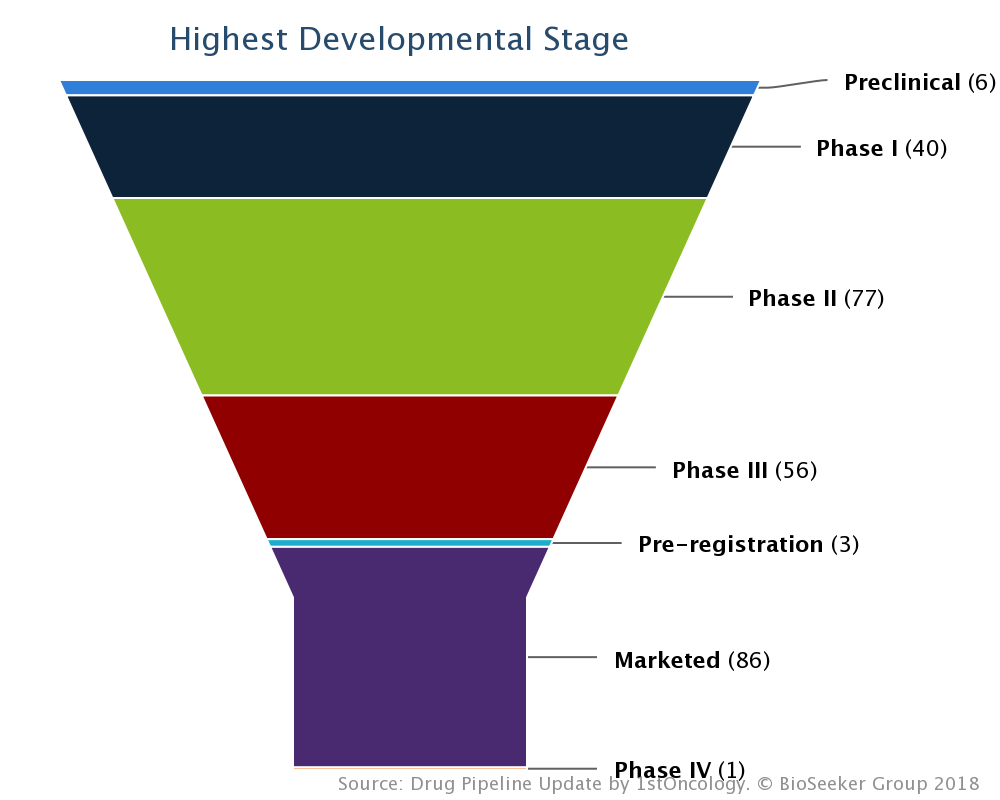
The hotbed of this conference is energized from an underlying cluster of roughly 300 drugs ranging from preclinical to marketed in maturity (see pipeline breakdown by stage above). Two fifths (40%) of these are Immune-Oncology drugs including Immune Checkpoint drugs, Cancer vaccines, Bispecific immunomodulators, CAR/TCR therapies and Oncolytic virotherapies. In the spotlight of this year’s Nobel Prize in Physiology or Medicine E.S.M.O 2018 features nearly 40 different immune checkpoint drugs, by far the most reported on immunotherapy and even more so if we take into account all combination therapy reports with the same. Other hot progress areas in cancer therapeutics include DNA Damage Response (DDR) drugs, epigenetic therapies, protein kinase inhibitors and antibody-drug conjugates (ADCs).

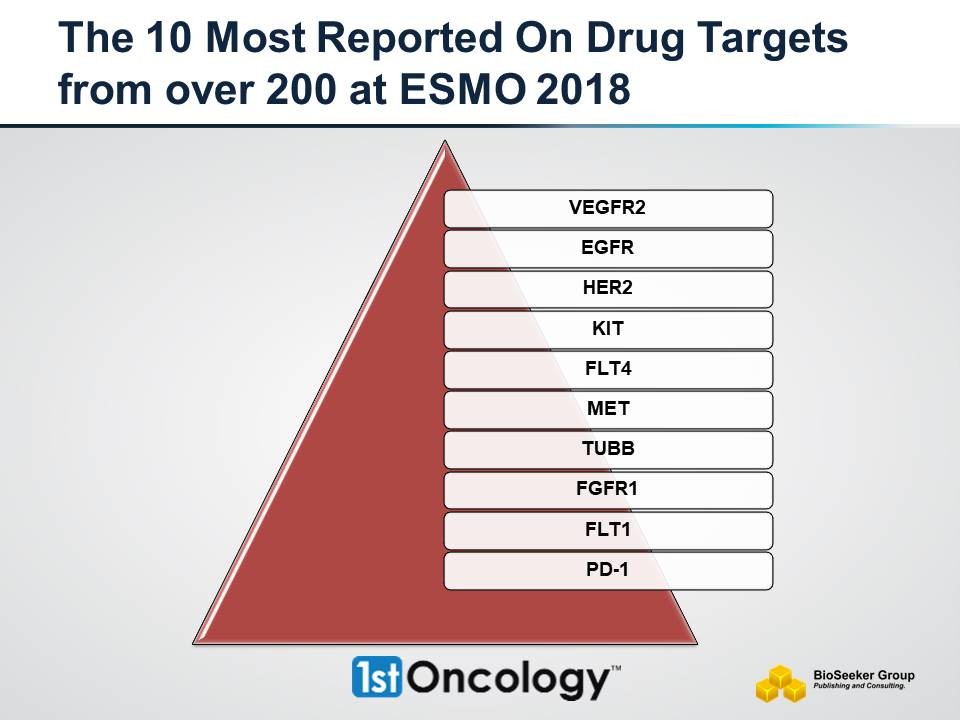
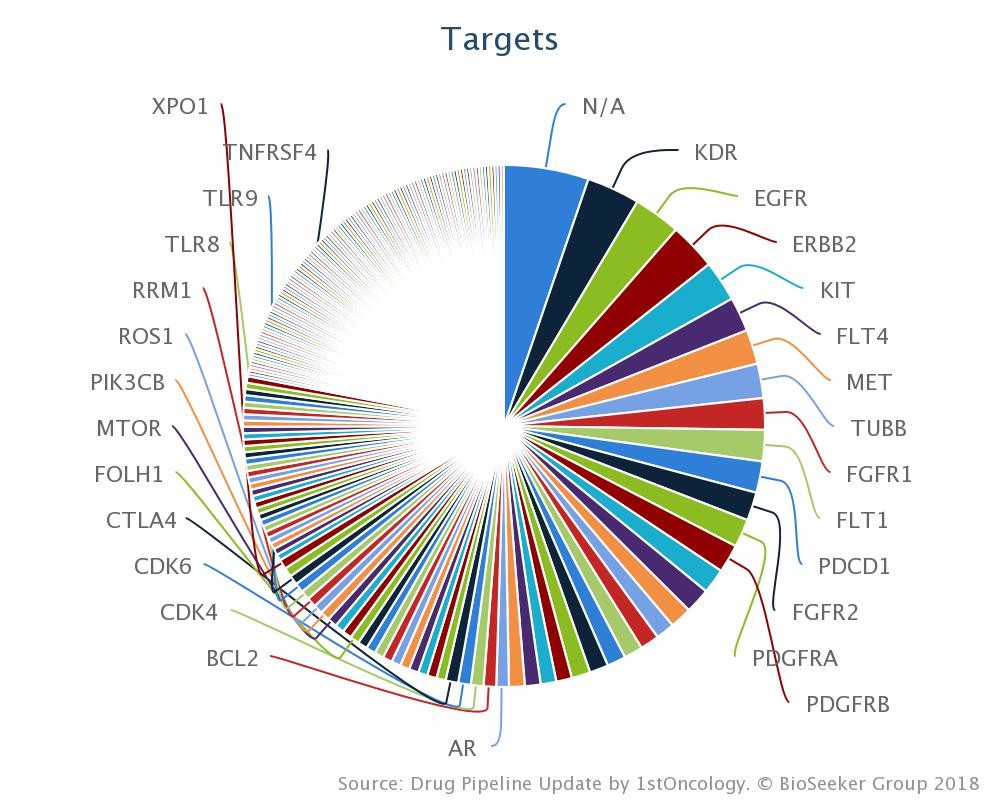
The number of targets related to the aforementioned drugs is close to 200 were the top five drug targets are: KDR/VEGFR2 (17), EGFR (15), HER2 (14), KIT (13) and FLT4 (11) (see target breakdown above).

On the contrasting end of these we find fourteen unique targets belonging to first-in-class drugs like Astellas’ enfortumab vedotin, a fully humanized monoclonal antibody that delivers the microtubule-disrupting agent monomethyl auristatin E to tumors expressing Nectin-4, which is highly expressed in 97% of metastatic urothelial cancer patient samples.

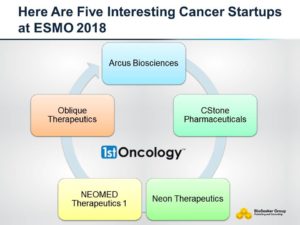
There is a global presence of companies at E.S.M.O 2018 ranging from big pharma to startups like Arcus Biosciences (USA), CStone Pharmaceuticals (China), Neon Therapeutics (USA), NEOMED Therapeutics 1 (Canada) and Oblique Therapeutics (Sweden).

It is noteworthy to mention that both Arcus Biosciences and Neon Therapeutics are 2016 winners of the prestigious Fierce 15 Biotech award (see 2018 cancer winners here). This prestigious award has come to symbolize novelty and being at the forefront of biotechnology development among businesses. The winners of this award are aiming at breakthroughs and big things, not at being ‘me-too’. For an example Arcus Biosciences is reporting stellar safety data from its phase 1 study of AB928, a dual antagonist of the A2aR and A2bR adenosine receptors. This development is of course only the tip of the iceberg of clinical trial reports presented at this year’s conference. In a late breaking abstract (LBA) Friday (October 19) Merrimack Pharmaceuticals will be providing more information to their previous report in June about their failed CARRIE study, evaluating the addition of istiratumab (MM-141) to standard-of-care treatment in patients with previously untreated metastatic pancreatic cancer and high serum levels of free Insulin-like Growth Factor-1 (For more LBAs see Saturday, Sunday and Monday releases). The study did not meet its primary or secondary efficacy endpoints in patients who received istiratumab in combination with nab-paclitaxel and gemcitabine, compared to nab-paclitaxel and gemcitabine alone. These results were consistent in all subgroups analyzed.

In overall the late breaking abstracts presented at ESMO (Free ESMO Whitepaper) 2018 are testament to years of rapid growth of and interest in combination therapy trials and in particular with immune-checkpoint inhibitors. On Saturday (October 20th) Genentech/Hoffman-La Roche got the world’s attention with “game changing” results from their IMpassion130 study, a global, randomised, double-blind, phase 3 study of atezolizumab + nab-paclitaxel versus placebo + nab-paclitaxel in treatment-naive, locally advanced or metastatic triple-negative breast cancer (mTNBC). Among those who received the combination, the median survival was 21.3 months, compared with 17.6 months for those who received chemotherapy alone. The difference was not statistically significant. However, looking only at women with positive PD-L1 expressing tumors the median survival was 25 months in the combination group, versus 15.5 months with just chemotherapy. That finding has however not been analyzed statistically, and the patients are still being followed. These finds were simultaneously published in View Source">The New England Journal of Medicine and presented at ESMO 2018.

In spite of limited representation of a major therapeutic class like CAR/TCR therapies or the latest progress on targeting the CD47-SIRPA axis, all in all the ESMO (Free ESMO Whitepaper) congress is Europe’s largest clinical oncology meeting and a go-to place that acts as a sign-post on the road ahead in cancer drug development.

Merck’s KEYTRUDA® (pembrolizumab) in Combination with Pfizer’s Inlyta® (axitinib) Significantly Improved Overall Survival (OS) and Progression-free Survival (PFS) as First-Line Therapy for Advanced or Metastatic Renal Cell Carcinoma

On October 18, 2018 Merck (NYSE: MRK), known as MSD outside the United States and Canada, reported that the pivotal Phase 3 KEYNOTE-426 trial investigating KEYTRUDA (pembrolizumab), Merck’s anti-PD-1 therapy, in combination with Inlyta (axitinib), Pfizer’s tyrosine kinase inhibitor, met both primary endpoints of overall survival (OS) and progression-free survival (PFS) in the first-line treatment of advanced or metastatic renal cell carcinoma (RCC), the most common type of kidney cancer (Press release, Merck & Co, OCT 18, 2018, View Source [SID1234529958]). Based on the first interim analysis by the independent Data Monitoring Committee (DMC), the KEYTRUDA plus Inlyta combination resulted in statistically significant and clinically meaningful improvements in OS and PFS, compared to sunitinib monotherapy. The study also met the key secondary endpoint of objective response rate (ORR), with significant improvements for the KEYTRUDA and Inlyta combination compared with sunitinib monotherapy. Results for OS, PFS and ORR were consistent regardless of PD-L1 expression and across all risk groups. The safety profile of KEYTRUDA and Inlyta in this trial was generally consistent with that observed in previously reported studies for each therapy. These results will be presented at an upcoming medical meeting and submitted to regulatory authorities worldwide.

Schedule your 30 min Free 1stOncology Demo!
Discover why more than 1,500 members use 1stOncology™ to excel in:

Early/Late Stage Pipeline Development - Target Scouting - Clinical Biomarkers - Indication Selection & Expansion - BD&L Contacts - Conference Reports - Combinatorial Drug Settings - Companion Diagnostics - Drug Repositioning - First-in-class Analysis - Competitive Analysis - Deals & Licensing

                  Schedule Your 30 min Free Demo!

"KEYTRUDA, in combination with the tyrosine kinase inhibitor Inlyta, resulted in significant and clinically meaningful improvements in overall survival, progression-free survival and objective response in this Phase 3 study. This marks the first time that combination treatment with an anti-PD-1 therapy has achieved the dual primary endpoints of overall survival and progression-free survival as first-line therapy in advanced renal cell carcinoma," said Dr. Roger M. Perlmutter, president, Merck Research Laboratories. "Fewer than 10 percent of those diagnosed with advanced renal cell carcinoma survive for five years, and hence there is significant need for improved therapies for this disease. We are very grateful to the investigators and patients for their involvement in this important study, the results of which will be filed with global regulatory authorities in the near future."

About KEYNOTE-426
KEYNOTE-426 is a randomized, double-arm, Phase 3 trial (ClinicalTrials.gov, NCT02853331) evaluating the safety and efficacy of KEYTRUDA in combination with Inlyta as first-line treatment for advanced or metastatic RCC compared to sunitinib. The dual primary endpoints of the study were OS and PFS, and the key secondary endpoint was ORR. Additional secondary endpoints were disease control rate (DCR), number of participants who experienced or discontinued the study due to an adverse event (AE), duration of response (DOR), PFS at 12, 18 and 24 months and OS at 12, 18 and 24 months. In the trial, 861 patients were randomly assigned to receive KEYTRUDA 200 mg intravenously every three weeks plus Inlyta 5 mg orally twice daily for up to 24 months, or sunitinib 50 mg orally once daily for four weeks followed by no treatment for two weeks, continuously.

About Renal Cell Carcinoma (RCC)
Renal cell carcinoma (RCC) is by far the most common type of kidney cancer; about 9 out of 10 kidney cancers are renal cell carcinomas. RCC is about twice as common in men as in women. Modifiable risk factors include smoking, obesity, workplace exposure to certain substances and high blood pressure. There are expected to be approximately 403,262 cases of kidney cancer diagnosed worldwide in 2018 and about 175,098 people will die from the disease. In the U.S. alone, there will be an estimated 63,340 new cases of kidney cancer diagnosed in 2018 and about 14,970 people will die from the disease

About KEYTRUDA (pembrolizumab) Injection, 100mg
KEYTRUDA is an anti-PD-1 therapy that works by increasing the ability of the body’s immune system to help detect and fight tumor cells. KEYTRUDA is a humanized monoclonal antibody that blocks the interaction between PD-1 and its ligands, PD-L1 and PD-L2, thereby activating T lymphocytes which may affect both tumor cells and healthy cells.

Merck has the industry’s largest immuno-oncology clinical research program. There are currently more than 850 trials studying KEYTRUDA across a wide variety of cancers and treatment settings. The KEYTRUDA clinical program seeks to understand the role of KEYTRUDA across cancers and the factors that may predict a patient’s likelihood of benefitting from treatment with KEYTRUDA, including exploring several different biomarkers.

KEYTRUDA (pembrolizumab) Indications and Dosing
Melanoma

KEYTRUDA is indicated for the treatment of patients with unresectable or metastatic melanoma at a fixed dose of 200 mg every three weeks until disease progression or unacceptable toxicity.

Lung Cancer

KEYTRUDA, in combination with pemetrexed and platinum chemotherapy, is indicated for the first-line treatment of patients with metastatic nonsquamous NSCLC, with no EGFR or ALK genomic tumor aberrations.

KEYTRUDA, as a single agent, is indicated for the first-line treatment of patients with metastatic non-small cell lung cancer (NSCLC) whose tumors have high PD-L1 expression [Tumor Proportion Score (TPS) ≥50%] as determined by an FDA-approved test, with no EGFR or ALKgenomic tumor aberrations.

KEYTRUDA, as a single agent, is also indicated for the treatment of patients with metastatic NSCLC whose tumors express PD-L1 (TPS ≥1%) as determined by an FDA-approved test, with disease progression on or after platinum-containing chemotherapy. Patients with EGFR or ALK genomic tumor aberrations should have disease progression on FDA-approved therapy for these aberrations prior to receiving KEYTRUDA.

In metastatic NSCLC, KEYTRUDA is administered at a fixed dose of 200 mg every three weeks until disease progression, unacceptable toxicity, or up to 24 months in patients without disease progression.

When administering KEYTRUDA in combination with chemotherapy, KEYTRUDA should be administered prior to chemotherapy when given on the same day. See also the Prescribing Information for pemetrexed and carboplatin or cisplatin, as appropriate.

Head and Neck Cancer

KEYTRUDA is indicated for the treatment of patients with recurrent or metastatic head and neck squamous cell carcinoma (HNSCC) with disease progression on or after platinum-containing chemotherapy. This indication is approved under accelerated approval based on tumor response rate and durability of response. Continued approval for this indication may be contingent upon verification and description of clinical benefit in the confirmatory trials. In HNSCC, KEYTRUDA is administered at a fixed dose of 200 mg every three weeks until disease progression, unacceptable toxicity, or up to 24 months in patients without disease progression.

Classical Hodgkin Lymphoma

KEYTRUDA is indicated for the treatment of adult and pediatric patients with refractory classical Hodgkin lymphoma (cHL), or who have relapsed after three or more prior lines of therapy. This indication is approved under accelerated approval based on tumor response rate and durability of response. Continued approval for this indication may be contingent upon verification and description of clinical benefit in the confirmatory trials. In adults with cHL, KEYTRUDA is administered at a fixed dose of 200 mg every three weeks until disease progression or unacceptable toxicity, or up to 24 months in patients without disease progression. In pediatric patients with cHL, KEYTRUDA is administered at a dose of 2 mg/kg (up to a maximum of 200 mg) every three weeks until disease progression or unacceptable toxicity, or up to 24 months in patients without disease progression.

Primary Mediastinal Large B-Cell Lymphoma

KEYTRUDA is indicated for the treatment of adult and pediatric patients with refractory primary mediastinal large B-cell lymphoma (PMBCL), or who have relapsed after 2 or more prior lines of therapy. This indication is approved under accelerated approval based on tumor response rate and durability of response. Continued approval for this indication may be contingent upon verification and description of clinical benefit in confirmatory trials. KEYTRUDA is not recommended for the treatment of patients with PMBCL who require urgent cytoreductive therapy.

In adults with PMBCL, KEYTRUDA is administered at a fixed dose of 200 mg every three weeks until disease progression, unacceptable toxicity, or up to 24 months in patients without disease progression. In pediatric patients with PMBCL, KEYTRUDA is administered at a dose of 2 mg/kg (up to a maximum of 200 mg) every three weeks until disease progression or unacceptable toxicity, or up to 24 months in patients without disease progression.

Urothelial Carcinoma

KEYTRUDA is indicated for the treatment of patients with locally advanced or metastatic urothelial carcinoma (mUC) who are not eligible for cisplatin-containing chemotherapy and whose tumors express PD-L1 [Combined Positive Score (CPS) ≥10] as determined by an FDA-approved test, or in patients who are not eligible for any platinum-containing chemotherapy regardless of PD-L1 status. This indication is approved under accelerated approval based on tumor response rate and duration of response. Continued approval for this indication may be contingent upon verification and description of clinical benefit in the confirmatory trials.

KEYTRUDA is also indicated for the treatment of patients with locally advanced or metastatic urothelial carcinoma (mUC) who have disease progression during or following platinum-containing chemotherapy or within 12 months of neoadjuvant or adjuvant treatment with platinum-containing chemotherapy.

In locally advanced or metastatic urothelial carcinoma, KEYTRUDA is administered at a fixed dose of 200 mg every three weeks until disease progression or unacceptable toxicity, or up to 24 months in patients without disease progression.

Microsatellite Instability-High (MSI-H) Cancer

KEYTRUDA is indicated for the treatment of adult and pediatric patients with unresectable or metastatic microsatellite instability-high (MSI-H) or mismatch repair deficient (dMMR)

solid tumors that have progressed following prior treatment and who have no satisfactory alternative treatment options, or
colorectal cancer that has progressed following treatment with fluoropyrimidine, oxaliplatin, and irinotecan.
This indication is approved under accelerated approval based on tumor response rate and durability of response. Continued approval for this indication may be contingent upon verification and description of clinical benefit in the confirmatory trials. The safety and effectiveness of KEYTRUDA in pediatric patients with MSI-H central nervous system cancers have not been established.

In adult patients with MSI-H cancer, KEYTRUDA is administered at a fixed dose of 200 mg every three weeks until disease progression, unacceptable toxicity, or up to 24 months in patients without disease progression. In children with MSI-H cancer, KEYTRUDA is administered at a dose of 2 mg/kg (up to a maximum of 200 mg) every three weeks until disease progression or unacceptable toxicity, or up to 24 months in patients without disease progression.

Gastric Cancer

KEYTRUDA is indicated for the treatment of patients with recurrent locally advanced or metastatic gastric or gastroesophageal junction (GEJ) adenocarcinoma whose tumors express PD-L1 [Combined Positive Score (CPS) ≥1] as determined by an FDA-approved test, with disease progression on or after two or more prior lines of therapy including fluoropyrimidine- and platinum-containing chemotherapy and if appropriate, HER2/neu-targeted therapy. This indication is approved under accelerated approval based on tumor response rate and durability of response. Continued approval for this indication may be contingent upon verification and description of clinical benefit in the confirmatory trials. The recommended dose of KEYTRUDA is a fixed dose of 200 mg every three weeks until disease progression, unacceptable toxicity, or up to 24 months in patients without disease progression.

Cervical Cancer

KEYTRUDA is indicated for the treatment of patients with recurrent or metastatic cervical cancer with disease progression on or after chemotherapy whose tumors express PD-L1 (CPS ≥1) as determined by an FDA-approved test. This indication is approved under accelerated approval based on tumor response rate and durability of response. Continued approval for this indication may be contingent upon verification and description of clinical benefit in the confirmatory trials. The recommended dose of KEYTRUDA is a fixed dose of 200 mg every three weeks until disease progression, unacceptable toxicity or up to 24 months in patients without disease progression.

Selected Important Safety Information for KEYTRUDA

Immune-Mediated Pneumonitis
KEYTRUDA can cause immune-mediated pneumonitis, including fatal cases. Pneumonitis occurred in 3.4% (94/2799) of patients receiving KEYTRUDA, including Grade 1 (0.8%), 2 (1.3%), 3 (0.9%), 4 (0.3%), and 5 (0.1%), and occurred more frequently in patients with a history of prior thoracic radiation (6.9%) compared to those without (2.9%). Monitor patients for signs and symptoms of pneumonitis. Evaluate suspected pneumonitis with radiographic imaging. Administer corticosteroids for Grade 2 or greater pneumonitis. Withhold KEYTRUDA for Grade 2; permanently discontinue for Grade 3 or 4 or recurrent Grade 2 pneumonitis.

Immune-Mediated Colitis
KEYTRUDA can cause immune-mediated colitis. Colitis occurred in 1.7% (48/2799) of patients receiving KEYTRUDA, including Grade 2 (0.4%), 3 (1.1%), and 4 (<0.1%). Monitor patients for signs and symptoms of colitis. Administer corticosteroids for Grade 2 or greater colitis. Withhold KEYTRUDA for Grade 2 or 3; permanently discontinue for Grade 4 colitis.

Immune-Mediated Hepatitis
KEYTRUDA can cause immune-mediated hepatitis. Hepatitis occurred in 0.7% (19/2799) of patients receiving KEYTRUDA, including Grade 2 (0.1%), 3 (0.4%), and 4 (<0.1%). Monitor patients for changes in liver function. Administer corticosteroids for Grade 2 or greater hepatitis and, based on severity of liver enzyme elevations, withhold or discontinue KEYTRUDA.

Immune-Mediated Endocrinopathies
KEYTRUDA can cause hypophysitis, thyroid disorders, and type 1 diabetes mellitus. Hypophysitis occurred in 0.6% (17/2799) of patients, including Grade 2 (0.2%), 3 (0.3%), and 4 (<0.1%). Hypothyroidism occurred in 8.5% (237/2799) of patients, including Grade 2 (6.2%) and 3 (0.1%). The incidence of new or worsening hypothyroidism was higher in patients with HNSCC occurring in 15% (28/192) of patients. Hyperthyroidism occurred in 3.4% (96/2799) of patients, including Grade 2 (0.8%) and 3 (0.1%), and thyroiditis occurred in 0.6% (16/2799) of patients, including Grade 2 (0.3%). Type 1 diabetes mellitus, including diabetic ketoacidosis, occurred in 0.2% (6/2799) of patients.

Monitor patients for signs and symptoms of hypophysitis (including hypopituitarism and adrenal insufficiency), thyroid function (prior to and periodically during treatment), and hyperglycemia. For hypophysitis, administer corticosteroids and hormone replacement as clinically indicated. Withhold KEYTRUDA for Grade 2 and withhold or discontinue for Grade 3 or 4 hypophysitis. Administer hormone replacement for hypothyroidism and manage hyperthyroidism with thionamides and beta-blockers as appropriate. Withhold or discontinue KEYTRUDA for Grade 3 or 4 hyperthyroidism. Administer insulin for type 1 diabetes, and withhold KEYTRUDA and administer anti-hyperglycemics in patients with severe hyperglycemia.

Immune-Mediated Nephritis and Renal Dysfunction
KEYTRUDA can cause immune-mediated nephritis. Nephritis occurred in 0.3% (9/2799) of patients receiving KEYTRUDA, including Grade 2 (0.1%), 3 (0.1%), and 4 (<0.1%) nephritis. Nephritis occurred in 1.7% (7/405) of patients receiving KEYTRUDA in combination with pemetrexed and platinum chemotherapy. Monitor patients for changes in renal function. Administer corticosteroids for Grade 2 or greater nephritis. Withhold KEYTRUDA for Grade 2; permanently discontinue for Grade 3 or 4 nephritis.

Immune-Mediated Skin Reactions
Immune-mediated rashes, including Stevens-Johnson syndrome (SJS), toxic epidermal necrolysis (TEN) (some cases with fatal outcome), exfoliative dermatitis, and bullous pemphigoid, can occur. Monitor patients for suspected severe skin reactions and based on the severity of the adverse reaction, withhold or permanently discontinue KEYTRUDA and administer corticosteroids. For signs or symptoms of SJS or TEN, withhold KEYTRUDA and refer the patient for specialized care for assessment and treatment. If SJS or TEN is confirmed, permanently discontinue KEYTRUDA.

Other Immune-Mediated Adverse Reactions
Immune-mediated adverse reactions, which may be severe or fatal, can occur in any organ system or tissue in patients receiving KEYTRUDA and may also occur after discontinuation of treatment. For suspected immune-mediated adverse reactions, ensure adequate evaluation to confirm etiology or exclude other causes. Based on the severity of the adverse reaction, withhold KEYTRUDA and administer corticosteroids. Upon improvement to Grade 1 or less, initiate corticosteroid taper and continue to taper over at least 1 month. Based on limited data from clinical studies in patients whose immune-related adverse reactions could not be controlled with corticosteroid use, administration of other systemic immunosuppressants can be considered. Resume KEYTRUDA when the adverse reaction remains at Grade 1 or less following corticosteroid taper. Permanently discontinue KEYTRUDA for any Grade 3 immune-mediated adverse reaction that recurs and for any life-threatening immune-mediated adverse reaction.

The following clinically significant immune-mediated adverse reactions occurred in less than 1% (unless otherwise indicated) of 2799 patients: arthritis (1.5%), uveitis, myositis, Guillain-Barré syndrome, myasthenia gravis, vasculitis, pancreatitis, hemolytic anemia, sarcoidosis, and encephalitis. In addition, myelitis and myocarditis were reported in other clinical trials and postmarketing use.

Treatment with KEYTRUDA may increase the risk of rejection in solid organ transplant recipients. Consider the benefit of treatment vs the risk of possible organ rejection in these patients.

Infusion-Related Reactions
KEYTRUDA can cause severe or life-threatening infusion-related reactions, including hypersensitivity and anaphylaxis, which have been reported in 0.2% (6/2799) of patients. Monitor patients for signs and symptoms of infusion-related reactions. For Grade 3 or 4 reactions, stop infusion and permanently discontinue KEYTRUDA.

Complications of Allogenic Hematopoietic Stem Cell Transplantation (HSCT)
Immune-mediated complications, including fatal events, occurred in patients who underwent allogeneic HSCT after treatment with KEYTRUDA. Of 23 patients with cHL who proceeded to allogeneic HSCT after KEYTRUDA, 6 developed graft-versus-host disease (GVHD) (one fatal case) and 2 developed severe hepatic veno-occlusive disease (VOD) after reduced-intensity conditioning (one fatal case). Cases of fatal hyperacute GVHD after allogeneic HSCT have also been reported in patients with lymphoma who received a PD-1 receptor–blocking antibody before transplantation. Follow patients closely for early evidence of transplant-related complications such as hyperacute graft-versus-host disease (GVHD), Grade 3 to 4 acute GVHD, steroid-requiring febrile syndrome, hepatic veno-occlusive disease (VOD), and other immune-mediated adverse reactions.

In patients with a history of allogeneic HSCT, acute GVHD (including fatal GVHD), has been reported after treatment with KEYTRUDA. Patients who experienced GVHD after their transplant procedure may be at increased risk for GVHD after KEYTRUDA. Consider the benefit of KEYTRUDA vs the risk of GVHD in these patients.

Increased Mortality in Patients with Multiple Myeloma
In clinical trials in patients with multiple myeloma, the addition of KEYTRUDA to a thalidomide analogue plus dexamethasone resulted in increased mortality. Treatment of these patients with a PD-1 or PD-L1 blocking antibody in this combination is not recommended outside of controlled clinical trials.

Embryofetal Toxicity
Based on its mechanism of action, KEYTRUDA can cause fetal harm when administered to a pregnant woman. If used during pregnancy, or if the patient becomes pregnant during treatment, apprise the patient of the potential hazard to a fetus. Advise females of reproductive potential to use highly effective contraception during treatment and for 4 months after the last dose of KEYTRUDA.

Adverse Reactions
In KEYNOTE-006, KEYTRUDA was discontinued due to adverse reactions in 9% of 555 patients with advanced melanoma; adverse reactions leading to permanent discontinuation in more than one patient were colitis (1.4%), autoimmune hepatitis (0.7%), allergic reaction (0.4%), polyneuropathy (0.4%), and cardiac failure (0.4%). The most common adverse reactions (≥20%) with KEYTRUDA were fatigue (28%), diarrhea (26%), rash (24%), and nausea (21%).

In KEYNOTE-189, when KEYTRUDA was administered with pemetrexed and platinum chemotherapy in metastatic nonsquamous NSCLC, KEYTRUDA was discontinued due to adverse reactions in 20% of 405 patients. The most common adverse reactions resulting in permanent discontinuation of KEYTRUDA were pneumonitis (3%) and acute kidney injury (2%). The most common adverse reactions (≥20%) with KEYTRUDA were nausea (56%), fatigue (56%), constipation (35%), diarrhea (31%), decreased appetite (28%), rash (25%), vomiting (24%), cough (21%), dyspnea (21%), and pyrexia (20%).

In KEYNOTE-010, KEYTRUDA monotherapy was discontinued due to adverse reactions in 8% of 682 patients with metastatic NSCLC. The most common adverse event resulting in permanent discontinuation of KEYTRUDA was pneumonitis (1.8%). The most common adverse reactions (≥20%) were decreased appetite (25%), fatigue (25%), dyspnea (23%), and nausea (20%).

In KEYNOTE-012, KEYTRUDA was discontinued due to adverse reactions in 17% of 192 patients with HNSCC. Serious adverse reactions occurred in 45% of patients. The most frequent serious adverse reactions reported in at least 2% of patients were pneumonia, dyspnea, confusional state, vomiting, pleural effusion, and respiratory failure. The most common adverse reactions (≥20%) were fatigue, decreased appetite, and dyspnea. Adverse reactions occurring in patients with HNSCC were generally similar to those occurring in patients with melanoma or NSCLC, with the exception of increased incidences of facial edema and new or worsening hypothyroidism.

In KEYNOTE-087, KEYTRUDA was discontinued due to adverse reactions in 5% of 210 patients with cHL. Serious adverse reactions occurred in 16% of patients; those ≥1% included pneumonia, pneumonitis, pyrexia, dyspnea, GVHD, and herpes zoster. Two patients died from causes other than disease progression; one from GVHD after subsequent allogeneic HSCT and one from septic shock. The most common adverse reactions (≥20%) were fatigue (26%), pyrexia (24%), cough (24%), musculoskeletal pain (21%), diarrhea (20%), and rash (20%).

In KEYNOTE-170, KEYTRUDA was discontinued due to adverse reactions in 8% of 53 patients with PMBCL. Serious adverse reactions occurred in 26% of patients and included arrhythmia (4%), cardiac tamponade (2%), myocardial infarction (2%), pericardial effusion (2%), and pericarditis (2%). Six (11%) patients died within 30 days of start of treatment. The most common adverse reactions (≥20%) were musculoskeletal pain (30%), upper respiratory tract infection and pyrexia (28% each), cough (26%), fatigue (23%), and dyspnea (21%).

In KEYNOTE-052, KEYTRUDA was discontinued due to adverse reactions in 11% of 370 patients with locally advanced or metastatic urothelial carcinoma. Serious adverse reactions occurred in 42% of patients; those ≥2% were urinary tract infection, hematuria, acute kidney injury, pneumonia, and urosepsis. The most common adverse reactions (≥20%) were fatigue (38%), musculoskeletal pain (24%), decreased appetite (22%), constipation (21%), rash (21%), and diarrhea (20%).

In KEYNOTE-045, KEYTRUDA was discontinued due to adverse reactions in 8% of 266 patients with locally advanced or metastatic urothelial carcinoma. The most common adverse reaction resulting in permanent discontinuation of KEYTRUDA was pneumonitis (1.9%). Serious adverse reactions occurred in 39% of KEYTRUDA-treated patients; those ≥2% were urinary tract infection, pneumonia, anemia, and pneumonitis. The most common adverse reactions (≥20%) in patients who received KEYTRUDA were fatigue (38%), musculoskeletal pain (32%), pruritus (23%), decreased appetite (21%), nausea (21%), and rash (20%).

In KEYNOTE-158, KEYTRUDA was discontinued due to adverse reactions in 8% of 98 patients with recurrent or metastatic cervical cancer. Serious adverse reactions occurred in 39% of patients receiving KEYTRUDA; the most frequent included anemia (7%), fistula, hemorrhage, and infections [except urinary tract infections] (4.1% each). The most common adverse reactions (≥20%) were fatigue (43%), musculoskeletal pain (27%), diarrhea (23%), pain and abdominal pain (22% each), and decreased appetite (21%).

Lactation
It is not known whether KEYTRUDA is excreted in human milk. Because many drugs are excreted in human milk, instruct women to discontinue nursing during treatment with KEYTRUDA and for 4 months after the final dose.

Pediatric Use
There is limited experience in pediatric patients. In a study in 40 pediatric patients with advanced melanoma, lymphoma, or PD-L1–positive advanced, relapsed, or refractory solid tumors, the safety profile was similar to that seen in adults treated with KEYTRUDA. Toxicities that occurred at a higher rate (≥15% difference) in these patients when compared to adults under 65 years of age were fatigue (45%), vomiting (38%), abdominal pain (28%), hypertransaminasemia (28%), and hyponatremia (18%).

Aclaris Announces Pricing of Public Offering of Common Stock

On October 18, 2018 Aclaris Therapeutics, Inc. (Nasdaq:ACRS), a dermatologist-led biopharmaceutical company focused on identifying, developing, and commercializing innovative therapies to address significant unmet patient needs in aesthetic and medical dermatology and immunology, reported the pricing of its underwritten public offering of 8,645,000 shares of its common stock at a price to the public of $10.75 per share (Press release, Aclaris Therapeutics, OCT 18, 2018, View Source [SID1234530333]). In addition, Aclaris has granted to the underwriters a 30-day option to purchase up to 1,296,750 additional shares of common stock at the public offering price, less the underwriting discount. The gross proceeds from the offering to Aclaris are expected to be approximately $92.9 million, before deducting underwriting discounts and commissions and offering expenses, but excluding any exercise of the underwriters’ option. The offering is expected to close on or about October 22, 2018, subject to customary closing conditions.

Schedule your 30 min Free 1stOncology Demo!
Discover why more than 1,500 members use 1stOncology™ to excel in:

Early/Late Stage Pipeline Development - Target Scouting - Clinical Biomarkers - Indication Selection & Expansion - BD&L Contacts - Conference Reports - Combinatorial Drug Settings - Companion Diagnostics - Drug Repositioning - First-in-class Analysis - Competitive Analysis - Deals & Licensing

                  Schedule Your 30 min Free Demo!

Leerink Partners and Evercore ISI are acting as joint book-running managers for the offering. Cantor is acting as lead manager for the offering. Guggenheim Securities is acting as co-manager for the offering.

A shelf registration statement relating to this offering was filed with the Securities and Exchange Commission (SEC) on November 2, 2016 and declared effective by the SEC on November 14, 2016. The offering is being made only by means of a written prospectus and prospectus supplement that form a part of the registration statement. A preliminary prospectus supplement and accompanying prospectus relating to the offering has been filed with the SEC and is available on the SEC’s website at www.sec.gov. A final prospectus supplement and accompanying prospectus will be filed with the SEC. When available, copies of the final prospectus supplement and the accompanying prospectus may also be obtained by contacting Leerink Partners LLC, Attention: Syndicate Department, One Federal Street, 37th Floor, Boston, MA 02110, telephone: (800) 808-7525, ext. 6132, or by email at [email protected]; or Evercore Group L.L.C., Attention: Equity Capital Markets, 55 East 52nd Street, 36th Floor, New York, New York 10055, by telephone at 888-474-0200, or by email at [email protected].

This press release shall not constitute an offer to sell or the solicitation of an offer to buy the securities being offered, nor shall there be any sale of the securities being offered in any state or other jurisdiction in which such offer, solicitation or sale would be unlawful prior to the registration or qualification under the securities laws of any such state or other jurisdiction.

PharmaMar will present at ESMO results of the phase III CORAIL study with lurbinectedin in platinum-resistant Ovarian Cancer

On October 18, 2018 During the congress of the European Society of Medical Oncology (ESMO) (Free ESMO Whitepaper), that will be held from the 19th to the 23rd of October in Munich, Germany, PharmaMar’s (MSE:PHM) Zepsyre (lurbinectedin) abstract #9320 entitled "Phase III trial of Lurbinectedin versus PLD or Topotecan in platinum-resistant ovarian cancer patients: Results of CORAIL trial" will be presented orally on the 19th of October (Press release, PharmaMar, OCT 18, 2018, View Source [SID1234529959]).

Schedule your 30 min Free 1stOncology Demo!
Discover why more than 1,500 members use 1stOncology™ to excel in:

Early/Late Stage Pipeline Development - Target Scouting - Clinical Biomarkers - Indication Selection & Expansion - BD&L Contacts - Conference Reports - Combinatorial Drug Settings - Companion Diagnostics - Drug Repositioning - First-in-class Analysis - Competitive Analysis - Deals & Licensing

                  Schedule Your 30 min Free Demo!

Dr. Ali Zeaiter, Director of Clinical Development of the Oncology Business Unit at PharmaMar explains: "While we are disappointed that the CORAIL trial didn´t meet its primary endpoint of PFS, the data obtained support that lurbinectedin has activity in platinum-resistant Ovarian Cancer."

Data obtained from other PharmaMar compounds of marine origin, lurbinectedin and Yondelis (trabectedin) will also be presented. These include four other posters with the latest advances in the clinical development of trabectedin, including the results of the randomized phase III (TSAR) study evaluating the quality of life of patients with Advanced Soft Tissue Sarcoma (ASTS).

The studies that will be presented during the ESMO (Free ESMO Whitepaper) 2018 Congress are available at: View Source

Lurbinectedin

Phase III trial of Lurbinectedin versus PLD or Topotecan in platinum-resistant ovarian cancer patients: Results of CORAIL trial (#932O)
Oral presentation – 19.10.2018, 14:00 – 15:15, in Hall A1 – Room 15.
Principal Author: S. Gaillard, Baltimore, US.

SAKK 17/16 – Lurbinectedin monotherapy in patients with progressive malignant pleural mesothelioma: A multicenter, single-arm phase II trial (#1817TiP)
Poster – 20.10.2018, 13:30 Hall A3 – Poster Area – Networking Hub
Principal Author: Y. Metaxas. Chur, Switzerland.

Yondelis (trabectedin)

Health-related quality of life in patients with advanced soft tissue sarcoma (ASTS): Results from the TSAR randomized phase III trial of the French Sarcoma Group (#1604PD)
Poster Discussion – Sarcoma. 22.10.2018, 11:00 – 12:15, in Hall B3 – Room 23
Principal Author: Axel Le Cesne, Villejuif, France.

Quality of Life in patients with soft tissue sarcoma undergoing palliative treatment – A multicenter, cluster-randomized trial within the German Interdisciplinary Sarcoma Group, GISG-12 (#1606PD)
Poster Discussion – Sarcoma. 22.10.2018, 11:00 – 12:15, in Hall B3 – Room 23
Principal Author: Leopold Hentschel, Dresden, Germany.

Trabectedin and radiotherapy in advanced sarcoma: experience of a Reference Center (#1626P)
Poster – 22.10.2018, 12:45 – 13:45, in Hall A3 – Poster Area Networking Hub
Principal Author: Javier Martín-Broto, Seville, Spain.

Trabectedin plus pegylated liposomal doxorubicin (PLD) in patients with platinum-sensitive recurrent ovarian cancer (PSROC) regardless of prior use of antiangiogenics: First results of an observational, prospective study (#987P)
Poster – 20.10.2018, 12:30 – 13:30, in Hall A3 – Poster Area Networking Hub
Principal Author: Sandro Pignata, Naples, Italy.

Legal warning
This press release does not constitute an offer to sell or the solicitation of an offer to buy securities, and shall not constitute an offer, solicitation or sale in any jurisdiction in which such offer, solicitation or sale would be unlawful prior to registration or qualification under the securities laws of that jurisdiction.

About PharmaMar
Headquartered in Madrid, PharmaMar is a biopharmaceutical company, focused on oncology and committed to research and development which takes its inspiration from the sea to discover molecules with antitumor activity. It is a company that seeks innovative products to provide healthcare professionals with new tools to treat cancer. Its commitment to patients and to research has made it one of the world leaders in the discovery of antitumor drugs of marine origin.
PharmaMar has a pipeline of drug candidates and a robust R&D oncology program. It develops and commercializes Yondelis in Europe and has other clinical-stage programs under development for several types of solid cancers: lurbinectedin (PM1183), PM184 and PM14. With subsidiaries in Germany, Italy, France, Switzerland, Belgium, Austria and the United States. PharmaMar wholly owns other companies: GENOMICA, a molecular diagnostics company; Sylentis, dedicated to researching therapeutic applications of gene silencing (RNAi); and a chemical enterprise, Zelnova Zeltia. To learn more about PharmaMar, please visit us at www.pharmamar.com.

About YONDELIS (trabectedin)
YONDELIS (trabectedin) is a multimodal, synthetically produced antitumor agent, originally derived from the sea squirt, Ecteinascidia turbinata. The drug exerts its activity by targeting the transcriptional machinery and impairing DNA repair. It is approved in close to 80 countries in North America, Europe, South America and Asia for the treatment of advanced soft tissue sarcomas as a single-agent and for relapsed ovarian cancer in combination with DOXIL/CAELYX (doxorubicin HCl liposome injection) in the European Union. Under a licensing agreement with PharmaMar, Janssen Products, L.P. has the rights to develop and sell YONDELIS globally except in Europe, where PharmaMar holds the rights, and in Japan, where PharmaMar has granted a license to Taiho Pharmaceuticals.

About lurbinectedin
Lurbinectedin (PM1183) is a compound under clinical investigation. It is an inhibitor of RNA polymerase II. This enzyme is essential for the transcription process that is over-activated in tumors with transcription addiction.